AI-Powered Energy Solutions for Home, Business and Utility
AI-driven energy solutions for all scenarios.
Experience Our Innovative
Energy Products
Power Your Energy Freedom
-
-
Sigen AI Mode
-
Sigen AI Insight
-
Sigen AI Assistant
-
Sigen Smart Home
-
-
-
BI Dashboard
-
Intelligent Charts
-
Monitoring & O&M
-
Points Redemption
-
-
+Employees
-
~ %R&D staff
-
+Cumulative patent applications
-
+Countries & regions
-
+Distributors
-
+Registered installers
*Data as of November 1, 2026
What They Really Think
Newsroom
- News
- Events
- Blog
-
20 Nov, 2026Sigenergy Earns Double BloombergNEF Tier 1 Recognition for Power Inverters and Energy Storage in Q4 2026
Sigenergy, a global innovator in next-generation energy storage solutions, has been officially named a BloombergNEF (BNEF) Tier 1 Manufacturer across both Power Inverters and Energy Storage for the fourth quarter of 2026. BloombergNEF's Tier 1 list is widely regarded as one of the renewable energy sector's most stringent independent benchmarks. Earning dual Tier 1 status in two core categories simultaneously underscores Sigenergy's strong financial stability, rigorous manufacturing quality, and proven project track record across international markets. The double recognition validates the real-world reliability of Sigenergy's AI-driven innovative architectures and reflects the growing global adoption of Sigenergy's core technological strengths: End-to-End Innovation: Innovative hardware and software integration delivers smarter, safer, and more resilient energy management. Full-Scenario Scale: Proven field performance spanning residential systems, commercial & industrial (C&I) facilities, and complex utility-scale power plants. Global Service & Support: Backed by continuous R&D investment and an expanding worldwide service and partner network. Looking ahead, Sigenergy will continue expanding its global footprint and advancing practical, AI-native energy technologies to support partners, installers, and communities around the world.
-
18 Nov, 2026Sigenergy Celebrates North American Partnerships at RE+ 2026 VIP Party, Reinforcing Long-Term Commitment to the Market
LAS VEGAS, U.S., November 17, 2026 — Sigenergy, a leading energy innovator, hosted an exclusive VIP Party in Las Vegas on November 17 during RE+ 2026, bringing together distributors, installers and industry partners from across North America. The evening celebrated shared achievements, highlighted Sigenergy's rapid global growth and reaffirmed its commitment to building lasting partnerships in the North American market. Opening the evening, Roy Zhang, President of Global Sales and Services of Sigenergy, reflected on the company's remarkable growth and global achievements. Since its founding in May 2022, Sigenergy has reached significant milestones, including its listing on the Hong Kong Stock Exchange in April 2026 and expansion into over 130 countries and regions, supported by more than 170 distributors worldwide. According to S&P Global Energy, Sigenergy also ranked No. 1 globally in residential energy storage by MWh shipments in the first half of 2026. "These achievements reflect not only our commitment to innovation but also the tremendous trust and support of our partners worldwide," said Roy. "With continued investment in R&D and a strong global foundation, we are well positioned to deliver sustainable growth and long-term value to our partners." Robert Schwarzinger, CEO of Sigenergy North America, reclaimed the company's commitment to the region. "We will continue strengthening our local sales and technical support teams, delivering innovative solutions and reliable service to help our partners grow with confidence," said Robert. Robert also introduced Sigenergy's comprehensive home energy ecosystem, designed to simplify installation and meet the evolving needs of North American households. Centred around SigenStor and its V2X capabilities, the portfolio brings together Sigen Backup Switch for seamless backup, Sigen Power Sensor for simplified energy metering, SigenMicro for intelligent rooftop solar and Sigen LoadHub for flexible load management. Powered by SigenAgent, the mySigen App intelligently unifies and manages these capabilities into a smarter, more connected home energy experience. A highlight of the evening was the Award Ceremony, recognising the outstanding achievements of Sigenergy's North American installation partners. Six River Solar, Prime Home Solution and beSolar received the Excellent Installer Awards, while Arizona Solar Wave and Vital Energy was honoured as a Gold Installer Certification. Pure Energy, Regis Electric and Provision Solar received the Breakthrough Excellence Award, and Sutro Power was presented with the Innovative Solution Award. Beyond the awards, the evening offered an opportunity for partners to share their experiences with Sigenergy. Reflecting on their partnership, a representative from Six River shared, "We chose Sigenergy for its innovative technology and integrated solutions, which help us deliver greater value to our customers." Similarly, Arizona Solar Wave highlighted the flexibility of SigenStor, saying, "Bringing solar, storage and EV charging together in one scalable system allows us to better meet the diverse energy needs of homeowners." Installation experience and local support were equally important themes. Pure Energy praised SigenStor's modular design, noting, "Its stackable architecture makes installation straightforward while providing flexibility for future expansion." Sutro Power also recognised the value of Sigenergy's local presence: "The North American team has been consistently responsive and supportive, giving us the confidence to deliver reliable solutions to our customers." The evening celebrated more than individual achievements, reflecting the trust and collaboration driving Sigenergy's continued growth in North America. Through stronger local partnerships, ongoing investment and technological innovation, Sigenergy remains dedicated to supporting its partners and building long-term success across the region.
-
10 Sep, 2026The Heart of Engineering Meets the Future of Energy: Sigenergy Showcases AI-Powered Utility-Scale Energy Storage with SigenStack DC-Coupled PV Project in Stuttgart
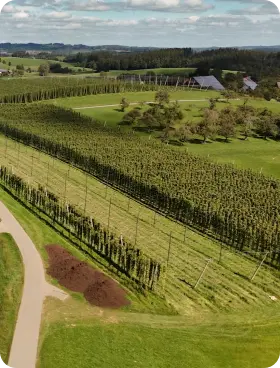
The decentralized utility-scale battery deployment demonstrates how AI integration and native DC coupling unlock higher renewable utilization, accelerate project execution, and optimize wholesale energy revenues. STUTTGART, GERMANY — September 10, 2026 — Sigenergy, a pioneer in battery energy storage solutions, has showcased how AI (Artificial Intelligence) and Advanced C&I Energy Storage Solutions can redefine utility-scale renewable infrastructure. At Sigenergy Day Europe 2026 which gathered nearly 400 global investors, EPCs and industry experts in Stuttgart, Sigenergy highlighted a landmark 11.6 MWp photovoltaic (PV) and 20 MWh battery energy storage system (BESS) project in Weissach im Tal, Baden-Württemberg, Germany. Developed in strategic partnership with PV specialist Arausol GmbH and European distributor Memodo, Solarpark Pfaffenklinge combines decentralized battery architecture, natural DC coupling, and AI-driven energy management to maximize asset value. The project deploys 1,660 Sigenergy battery modules, each with a 12 kilowatt-hour (kWh) capacity, establishing a highly flexible, decentralized storage footprint that replaces traditional containerized battery enclosures. 80 hybrid inverters, each with 100kW AC capacity, are installed alongside the battery modules. Sigenergy also provides 2 units of medium-voltage transformer (MVT) stations equipped with pre-installed low-voltage connections. Decentralized Storage Accelerates Deployment Logistics Solarpark Pfaffenklinge establishes a new operational blueprint for utility-scale battery installation. Rather than concentrating storage capacity into centralized, high-tonnage BESS containers, Sigenergy's modular SigenStack units are installed right under the PV modules mounted on Arausol's ground-mount racking system. This plug-and-play architecture minimizes heavy field wiring, eliminates crane requirements during placement, and reduces site civil engineering. Furthermore, the decentralized footprint avoids extensive concrete foundations, preventing soil sealing across the installation site. The modular architecture enabled exceptionally fast execution, completing site construction in 20 days and grid commissioning in 2 hours. Supporting flexible back-of-string or side-of-string mounting, the system allows project developers to match storage capacity precisely to site specifications while reducing capital expenditure (CAPEX) and site complexity. Multi-Layer Thermal Safety and AFCI Protection As utility-scale storage facilities expand, comprehensive safety architecture remains central to asset engineering. Sigenergy's solution integrates multi-tiered hardware and software protection mechanisms. System safety features include the pack-level safety isolation, full-coverage thermal sensing, and dedicated internal fire suppression within each 12 kWh battery module. Each pack is further equipped with smoke sensors, decompression valves, aerogel heat isolation, and high-temperature insulation barriers to prevent thermal propagation across neighboring modules. Super AFCI arc-fault protection has also extended up to 600 meters, providing further safety to the whole project. AI-Driven Operations and Revenue Optimization At the core of the project is the integration of Sigenergy's AI-powered energy management system with native DC-coupled storage. With dynamic electricity pricing and negative price events occurring more frequently across European power exchanges (such as EPEX SPOT), utility assets must operate dynamically. Sigenergy addresses this market volatility through SigenAgent, an all-domain AI Energy Agent, the energy industry's first all-domain AI agent that operates on a continuous, closed loop of Perception - Reasoning - Action. It absorbs real-time environmental factors (weather shifts, grid stability, market pricing) to execute maximum facility efficiency. Smart Clipping & Negative Price Protection Once enabled, Sigenergy's AI-powered energy management system will automatically stop feeding energy into the grid during negative electricity price periods. Excessive solar energy is saved in the battery instead. If negative prices are predicted, Sigen AI will discharge the battery in advance based on your energy usage habits and PV generation forecast, to make enough room for the upcoming solar power. DC Coupling: Eliminating Conversion Losses to Maximize Solar Yield Unlike traditional AC-coupled utility configurations, Sigenergy's solution routes excess photovoltaic power directly into storage as DC power. By eliminating repeated DC-to-AC and AC-to-DC conversion steps, the system delivers an estimated 3.7% higher power conversion efficiency over AC-coupled equivalents while reducing secondary inverter and transformer requirements. This architecture directly addresses grid interconnect constraints at Solarpark Pfaffenklinge. Operating under an 8.8 MVA grid connection limit for an 11.6 MWp PV plant, native DC coupling allows the facility to generate at full capacity without curtailment. Generation exceeding the grid capacity limit is stored directly on the DC bus and dispatched when grid capacity and wholesale prices allow. Industry Perspectives "This project sends a clear message: Sigenergy's innovative solutions are redefining utility-scale energy storage in European markets," said Tony Xu, Founder and CEO of Sigenergy. "By combining our advanced modular architecture with AI-powered energy management, SigenStack enables utility-scale systems to be deployed faster, smarter, and more efficiently. Paired with Arausol's mounting systems, we deliver rapid commissioning, superior energy yield, and reduced operational costs while minimizing land sealing to protect local ecosystems." For Germany's broader energy transition, decentralized DC-coupled storage allows renewable developers to maximize existing grid infrastructure, mitigating grid congestion and reducing the capital required for transmission line expansion. "As a leading system integrator, our commitment is to deploy technology that truly advances the market," noted Jaime Arau, CEO and Founder of Arausol GmbH. "Sigenergy's innovative solutions deliver the exact performance, safety, and rapid deployment capabilities that our utility-scale projects demand." Jonas Hollweg, Head of Sales at Memodo, added: "The success of Solarpark Pfaffenklinge highlights how close collaboration between manufacturers, project developers, and distributors can bring next-generation BESS technology to the European energy market at scale." Transforming Energy Storage into Intelligent Infrastructure Solarpark Pfaffenklinge marks Sigenergy's formal expansion into the utility-scale energy storage segment. By unifying advanced power electronics, modular battery design, and real-time AI optimization, the company provides energy infrastructure capable of responding dynamically to volatile generation, grid capacity limits, and real-time market pricing across European power markets. As Europe accelerates toward its net-zero goals, Sigenergy is committed to bringing more innovative solutions to its local partners and clients—where intelligent automation, uncompromised safety, and flawless execution converge to turn complex grid challenges into enduring market opportunities.
-
September 22-24, 2026Solar & Storage Live UK 2026
-
September 10, 2026Sigenergy Day Europe 2026
Dear Sir or Madam, At Sigenergy, our mission is to lead AI-powered PV and energy storage innovation. We are delighted to invite you to Sigenergy Day Europe 2026, an exclusive event in Stuttgart, Germany, the heart of engineering excellence. Here you will: · Witness an AI-powered solar + storage project in action, experiencing firsthand how Sigenergy's intelligent energy solutions deliver superior safety, ultra simplicity, and outstanding performance in a utility-scale project. · Experience our V2X live demonstration, where EV becomes part of a smart energy ecosystem. · Savor the best of Stuttgart with industry leaders and investors over an evening of wine at a historic winery. Your participation will mark a pivotal moment in the advancement of AI-powered energy storage. We look forward to welcoming you to this exclusive gathering in Stuttgart, where industrial heritage meets the future of energy.
-
June23-25, 2026InterSolar Europe 2026
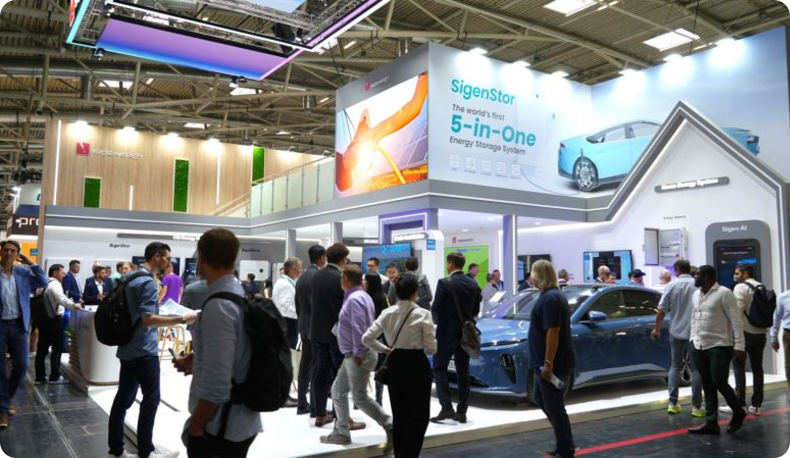
Dear Sir or Madam, We are delighted to invite you to visit our booth at Inter Solar Europe 2026, taking place from June 23 to 25 in Munich, Germany, and discover how AI is transforming the energy landscape. At the event, you will experience our "AI in All" strategy, which brings intelligence to the entire energy ecosystem. By embedding AI across products, software, manufacturing, and energy management systems, we are transforming energy systems into intelligent, collaborative, and continuously optimized platforms. Meet our experts and explore tailored solutions across residential, commercial, and utility-scale applications. We look forward to welcoming you in Munich.
-
23 Sep, 2026SigenFlux: A New Standard for Intelligent Home Heating
Birmingham, UK – September 22, 2026 – Sigenergy has unveiled SigenFlux, its new AI Agent-powered heat pump solution, at Solar & Storage Live UK 2026. SigenFlux is a key component of Sigenergy's AI-powered home energy ecosystem integrating photovoltaic (PV), energy storage, and thermal systems. By extending Sigenergy's energy ecosystem into home heating, SigenFlux transforms the heat pump from a standalone heating, ventilation, and air conditioning (HVAC) appliance into a controllable household energy load, enabling closer coordination between home climate control and intelligent energy management. AI-Driven Energy Optimization with SigenAgent Powered by SigenAgent, the energy industry's first all-domain AI agent integrated into the mySigen App, SigenFlux enables AI-driven energy strategies based on forecasts of dynamic electricity tariffs and heating demand. Based on dynamic electricity tariffs, the system automatically optimizes heat pump operating schedules, prioritizing heating and thermal storage during lower-cost periods and reducing electricity consumption during higher-price periods to help lower home energy costs. In addition, by combining electricity prices with operating parameters such as heat-loss characteristics of the primary water circuit and domestic hot water (DHW) system, DHW temperature, and heat pump power, the system can determine when to preheat or store thermal energy. For recurring high-energy-demand tasks such as DHW disinfection, it can also identify more economical operating windows. The system further learns users' heating habits and DHW usage patterns, as well as their temperature preferences, to anticipate future heating and hot water demand, enabling smarter heating strategies and helping avoid unnecessary energy consumption. Depending on anticipated demand, the system can be activated in advance for preheating or enter a lower-power standby state. By analyzing energy consumption under different temperature settings, it can also provide personalized energy-saving recommendations. Furthermore, SigenAgent also provides an intelligent O&M experience from issue identification to actionable recommendations. Drawing on online knowledge resources, device status, and fault information, it can automatically match relevant documentation, identify the cause, and provide operating instructions. This reduces the need for manual searches and troubleshooting, speeding up issue identification and resolution. Reliable Performance in Low Temperatures SigenFlux delivers reliable heating and operation in extreme cold, raising the bar for cold-climate performance. At the core of this capability is the combination of an R290-based inverter heat pump system designed for a wide operating temperature range, Enhanced Vapor Injection (EVI) technology, an intelligent defrost mechanism, flexible auxiliary heating, and precise regulation of key parameters such as compressor frequency, fan speed, and electronic expansion valve opening. The EVI compressor increases refrigerant flow, enables intermediate vapor injection, and supports more effective compression, resulting in stronger heating output and a wider operating range compared with conventional compressors. The intelligent defrost strategy further enhances reliability by monitoring multiple parameters, including suction temperature, coil temperature, changes in coefficient of performance (COP), and low-pressure data, to determine the optimal defrost timing. Compared with conventional systems that typically rely on scheduled defrost, this adaptive approach helps reduce unnecessary or ineffective defrost cycles and the energy waste they cause, supporting stable and comfortable heating even in severe cold. Advanced Noise Reduction for Quiet Heating SigenFlux features a multi-layered noise reduction design, offering a quieter experience than other heat pumps on the market for enhanced comfort day and night. A dual-layer insulation system—a sound blanket wrapped around the compressor and acoustic foam enclosing the compressor compartment—works together with a flexible vibration-damping structure to reduce noise and vibration transmission. A bionic aerodynamic fan blade, inspired by the silent flight of owls, further reduces fan noise, while an EPP-sealed duct design helps contain sound. Comprehensive Safety Protection Compared with conventional systems, SigenFlux is designed with a more comprehensive, multi-layered safety architecture, including plate heat exchanger freeze protection, a micro-bubble air vent valve, low-pressure monitoring with automatic shutdown protection, ATEX-certified electrical components, reinforced piping to mitigate leak risks, and refrigerant leak monitoring. More than 10 sensors continuously monitor critical operating parameters, enabling early detection of potential issues and supporting timely intervention for safe, reliable, and comfortable operation around the clock. Quick & Easy Installation SigenFlux is designed to simplify installation while adapting to a wide range of residential environments. Its compact, highly integrated hydronic module reduces the need for external components and on-site piping, helping streamline installation and reduce the number of installation steps. Multi-directional piping connections provide greater flexibility in pipe routing, allowing SigenFlux to fit into space-constrained or more complex installation environments. The system also supports Sub-1G wireless communication, eliminating the need for additional wiring and further simplifying installation. The detachable wired controller can also be flexibly positioned, making commissioning more convenient while supporting easy access for everyday operation. Intelligent Integration into the Home Energy Ecosystem As a controllable household load, SigenFlux can be dispatched by the home energy management system (EMS) to absorb surplus solar power through heat pump operation and auxiliary electric heating, converting excess electricity into useful heat. The EMS coordinates SigenFlux with PV generation, energy storage, and other household loads to increase solar self-consumption and reduce reliance on grid electricity. Based on real-time information such as PV generation, battery state of charge (SOC), and grid import/export status, the EMS dynamically adjusts SigenFlux's operation, using available solar power for heating or preheating. Once heating requirements are met, the EMS can redirect remaining surplus energy to battery charging or grid export, further improving the utilization of locally generated renewable energy. During a power outage, the energy storage system can provide backup power to SigenFlux, enabling normal heating operation. This allows the system to maintain indoor temperature and hot water supply, helping preserve household comfort and heating continuity during grid interruptions. Expanding the boundaries of the home energy ecosystem, SigenFlux delivers greater comfort, stability, and energy efficiency while enabling coordinated operation across home climate control, PV generation, energy storage, electric vehicle (EV) charging, and other household loads. Driven by Sigenergy's "AI in All" strategy, this unified and intelligent energy ecosystem continues to empower households with greater energy independence, enabling a smarter and more sustainable way of life.
-
02 Sep, 2026Powered by SigenAgent: How AI Is Personalizing Home Energy for Every User
Home energy management is becoming more complex, while household needs are becoming more personal. Sigenergy’s Personal Strategy addresses this shift by letting users express what they want in natural language, powered by SigenAgent, the energy industry’s first all-domain AI agent. This article expounds the intelligence behind Personal Strategy and explores three real-world cases showing how AI can support different ways of managing and personalizing home energy. The Growing Complexity of Home Energy As rooftop solar, home batteries, and EVs become increasingly common, more households are taking an active role in generating, storing, and managing their own energy. Meanwhile, time-of-use and dynamic tariffs are creating more opportunities to decide when to consume, store, buy, or sell electricity. As a result, home energy management is no longer simply about producing and using electricity. Households increasingly need to decide when to charge, discharge, buy, or sell, and these decisions can vary significantly from one household to another. One may prioritize solar self-consumption, while an EV owner may need to coordinate charging with household energy use. There is no single definition of the “best” way to manage energy because the right approach depends on each household’s goals, habits, and priorities. This raises a new question: What if homeowners could simply tell their energy system what they want, instead of figuring out how to configure it? That is the idea behind Sigenergy’s Personal Strategy, which allows users to express their desired outcomes in natural language. Behind this feature is SigenAgent, the energy industry’s first all-domain AI agent. SigenAgent: The Intelligent AI Agent Behind Everything From LLMs to Agents: Giving AI the Power to Act Before introducing SigenAgent, it is important to distinguish an LLM from an AI agent. A Large Language Model (LLM) can understand natural language, reason through questions, and generate responses. But on its own, it mainly works with the information available to it. It does not inherently have access to a live energy system or the ability to independently execute actions across connected devices. An AI agent goes a step further. Built on an LLM, it can understand user intent, access relevant data and tools, plan actions, and execute them toward a specific outcome. In energy management, for example, an agent can go beyond explaining why a battery is not discharging by checking real system conditions and, with user confirmation, taking action accordingly. In simple terms, an LLM can provide an answer. An AI agent can understand, decide and act. The Architecture and Strength Behind SigenAgent What does it actually take for an AI agent to understand, decide and act in the real world? The architecture behind SigenAgent provides the answer. SigenAgent can be thought of as an intelligent energy team with different capabilities working together. On the left, multiple AI models provide language understanding and reasoning capabilities. SigenAgent can work with leading models such as Gemini 3.1 Pro, GPT-5.5, and DeepSeek V4, drawing on their different strengths. The other components connect SigenAgent with Sigenergy’s energy ecosystem, user interfaces, and supporting resources. A unified MCP gateway provides secure access to the data, tools, and devices it needs to operate. Users can interact with SigenAgent through different entry points, including mySigen App, WhatsApp, and WeChat. In the future, it could also collaborate with other specialized AI agents as the ecosystem evolves. Together, these components give SigenAgent three defining strengths: deep professional expertise, truly real-time capabilities, and trust and safety. Deeply Professional: · Built on data from 200,000+ solar-plus-storage systems and over 10 million operating hours · Cloud algorithms continuously integrate frontier models Truly Real-Time: · End-to-end sensing across PV, storage, EV charging, home loads, and the grid · Millisecond-level data acquisition and closed-loop control through the built-in EMS · System data refreshed every 10 seconds Trust and Safety: · Data stored locally across six global AWS regions, aligned with GDPR and regional requirements · Strategies can continue briefly during cloud outages before switching to local control · Up to 48 hours of strategy explanations for greater transparency Four Specialized Agents for Different Energy Scenarios SigenAgent is built around four specialized agents, each designed for a different part of the energy lifecycle. For residential users, the System Management Agent focuses on personal energy management, including device control, energy analysis, and personalized strategies. It is the specialized agent behind Personal Strategy in mySigen App, turning individual energy preferences into strategies the system can understand and execute. For other energy scenarios, the System O&M Agent supports automated inspections, fault diagnosis, and O&M reporting. The Power Trading Agent forecasts electricity prices and optimizes charging and discharging to improve energy returns. The Business Operation Agent connects business data with operational insights to support better decisions. Although their roles differ, all four follow the same fundamental loop: sense, think, act, and optimize. Powered by SigenAgent: Real Cases of Personal Strategy Since its launch with mySigen App 4.0, Personal Strategy has successfully addressed diverse energy needs across different countries. The following cases show three distinct ways users are personalizing energy management: managing multiple needs across seasons, going beyond predefined modes, and setting personal boundaries for AI. Peter G., Sweden: Adapting Battery Management to Seasonal Needs Peter wanted to optimize battery usage while reducing unnecessary charge and discharge stress. The goal was to make fuller use of the battery capacity during winter while avoiding deeper cycling during the warmer months. Peter described these requirements directly to SigenAgent and built four Personal Strategy preferences around them. The first two establish different seasonal SOC limits. From January to April and September to December, the battery is set between 5% and 90% SOC. From May to August, the limits change to 10% to 80% SOC, reducing the depth of charge and discharge during the warmer period. The third preference addresses electricity prices. Peter told the system to avoid buying electricity between 10:00 and 15:30 unless it is cheap enough. The reasoning is that solar generation should normally cover charging and self-consumption during the summer, while daytime electricity is typically more expensive during the winter in the SE3 region of Sweden. The fourth preference accounts for an additional 1 kW household load on Wednesdays, Fridays, and Saturdays from trickle charging an EV. Together, these four preferences give the system a clearer picture of the household’s needs, helping it adapt across seasons, prices, and daily routines. Andy Chambers, United Kingdom: Balancing Profit and Battery Wear Andy had previously stopped using AI because neither of the available modes matched the way the battery needed to operate. The priority was to benefit from cheaper overnight electricity without adding unnecessary battery wear. Personal Strategy allowed these requirements to be combined into one setup. The battery charges overnight to 100% at a maximum rate of 3.5 kW, while overnight battery-to-grid export is disabled to avoid unnecessary cycling. For the evening, the system is set to discharge at up to 4.5 kW and reach 20% SOC by 23:30. Rather than requiring a fixed discharge schedule, the AI determines when to start discharging based on the target, so the battery reaches the required SOC at the right time and can then recharge during the cheaper overnight period. This gives Andy a level of control that predefined modes could not provide, while leaving the AI to determine the timing needed to meet those personal requirements. TimNL, Netherlands: Setting Personal Guardrails for AI TimNL wanted to make full use of self-generated solar energy while keeping grid purchases below a personal price limit. The key requirement was to never buy electricity above €0.25/kWh, while reserving around 20% SOC for household use during the night and morning. TimNL first asked the AI to prevent any grid purchase above €0.25/kWh, creating a 24/7 Personal Strategy. Meanwhile, another request asked the AI to keep 20% SOC for self-consumption from 18:00 to 07:00, creating separate night and morning strategies. TimNL also wanted to limit unnecessary energy trading. Although the actual difference between the buy and sell prices was 9 cents, this user felt this would make the AI trade too frequently. By lowering the sell price to keep the gap with the buy price within 3–9 cents, the strategy significantly reduced trading activity—to no more than about once a day, resulting in an average of around 0.9 battery cycles per day over the year. Without these personal “guardrails,” the AI could sell too much stored energy, leaving the battery empty and requiring grid purchases during the night or morning. TimNL estimates this previously cost around €1 per day. With the additional rules in place, the system can prioritize using self-generated solar energy, sell surplus electricity to the grid, and avoid buying energy above the €0.25/kWh limit. This case shows another side of Personal Strategy: users can define not only what they want the AI to do, but also the boundaries within which they want it to operate. AI In All: Where AI Meets Everyday Energy From increasingly complex home energy needs to personalized management, AI is moving beyond information and into real-world energy operations. Personal Strategy shows what this shift can look like in practice. Through SigenAgent, users can define what matters to them while AI handles the complexity of execution. This reflects the core of Sigenergy’s AI In All strategy: bringing AI deeper into energy across devices, systems, applications, and user interactions. SigenAgent is an important step toward a more personalized energy experience, where AI does not simply understand what users need, but acts on it.

-
10 Aug, 2026Reimagining Utility-scale Solar for A New Energy Era
By Jonathan Gifford, Climate Copy Big solar has entered a new, more complex phase. But it is also a period in which new approaches to project design are unlocking the next wave of value. With its Utility PV Solution, Sigenergy is bringing a distributed power conversion topology, advanced BESS integration, and a new approach to large-scale solar deployment – and it's serious about its mission. Under bright spring skies, amid the rolling green hills of Germany's south west, more than 80 solar professionals got up close and personal with the cutting edge of PV and battery energy storage system (BESS) innovation. And the rapid pace of change sweeping through the industry was on full display. On May 28, 2026, disruptive power electronics and BESS manufacturer Sigenergy welcomed industry partners, researchers, and representatives from local utilities to an event in the picaresque Baden-Württemberg countryside for Sigenergy Connect – an event based on the exchange of ideas and insights regarding solar and storage solutions for the fast-emerging next phase of the energy transition. New PV project paradigm With evolving electricity market dynamics creating opportunities for innovative hybrid solar-plus-BESS projects in the region, and increasingly across Germany and throughout Europe, the renewable energy sector has entered a period of rapid transformation — one that promises to unlock significant value. New approaches to project design and deployment are emerging, with the potential to transform not only the clean energy industry, but electricity networks. Speaking at Sigenergy Connect, Elena Pabst, a researcher with the Center for Solar Energy and Hydrogen Research Baden-Württemberg (ZSW), explained that grid bottlenecks are quickly becoming one of the biggest constraints on continued renewable energy expansion. During periods of high solar generation – during the day – available grid capacity is often insufficient to absorb all of the solar electricity being produced. Pabst highlighted increased BESS deployment – especially when paired with renewable generation such as solar PV – as one of the most effective solutions to these limitations. Pabst also shared insights from two ZSW research projects exploring the future role of energy storage in Germany. HybrEEd is demonstrating how hybrid renewable energy and BESS projects can make more efficient use of grid connection points, while the STRIVE.BW project is exploring how batteries can support electricity networks by flexibly charging and discharging according to real-time grid conditions. At the event in May, these concepts moved from theory to practice, with attendees able to see a real-world demonstration of these capabilities. DC-coupling in action At the ZSW test field near the historic village of Widderstall, Baden-Württemberg, an innovative hybrid solar-plus-BESS system is demonstrating how PV and storage technologies can be effectively integrated — and the role they can play in relieving grid bottlenecks while maximizing the use of solar energy generated onsite. At the Widderstall test site, local utility EnBW – Germany's third-largest energy company, serving more than 5.5 million customers – has installed a 252 kWh DC-coupled BESS in a hybrid configuration alongside a 70 kW ground-mounted solar array. The project is designed to showcase the performance benefits of the architecture and validate its operational strategy in real-world conditions. Speaking at Sigenergy Connect, Richard Riedlinger, Technical Planning, PV Project Development at EnBW, outlined the advantages that DC-coupled storage can deliver. Compared to AC-coupled systems, DC-coupled BESS architectures require fewer components, can achieve higher efficiency, and enable more PV-generated electricity to be captured and utilized. Following the event, Sigenergy Key Account Manager for the DACH region Sebastian Feges noted that while AC-coupled BESS configurations have historically been the default approach, the market is beginning to shift. "The industry is increasingly recognizing that operating under direct current (DC) is not only safe but also delivers significant efficiency gains," said Feges. Wider utility-scale trends The adoption of DC-coupled BESS is just one of several technological and market shifts currently reshaping the utility-scale solar segment – and Sigenergy is positioning itself at the forefront of these developments. In 2026, Sigenergy launched its Utility PV Solution, building on the success of its stackable BESS platforms for residential and commercial and industrial (C&I) applications – SigenStor and SigenStack, respectively – as well as its advanced power electronics portfolio, including microinverters for rooftop applications. The solution's distributed power conversion architecture is designed to deliver a lower levelized cost of energy (LCOE), enhanced system safety and reliability, and advanced operations and maintenance (O&M) capabilities. The Sigenergy utility-scale platform comprises 460 kW string inverters, the SigenTerra utility-scale storage solution, the SigenMVT Transformer Station, Sigen CommBox, and Sigen Datalogger. The platform can be paired with batteries in either an AC- or DC-coupled configuration, providing project developers with greater flexibility and the potential for higher energy yields. The adoption of string inverters in utility-scale applications has been gaining momentum in Europe since the late 2010s. S&P Global forecasts that in 2026 string inverters will account for almost 78% of the utility-scale inverter market in Asia, and more than 60% in the EMEA region. "There are still central inverter strongholds," said Cormac Gilligan, a Director of Cleantech with the analyst. "S&P Global Energy notes that central inverters accounted for at least 95 percent of total shipments to utility scale in both the United States and Australia in 2024." Central (orange) vs. String (blue) Market Share by Geogra Source: S&P Global: PV inverter market tracker – H2'25' The O&M advantage "The centralized inverter topology can definitely be improved on," said Gregory Lukens, Director of EU Sales for the utility-scale market segment at Sigenergy. "The better way is through decentralization. There are many other technologies that embrace decentralization – like a CPU, which has different cores. Decentralizing and removing bottlenecks is key; it is a positive attribute, and today it is cost competitive." Lukens added that string inverters also provide significant O&M advantages. Through a "swap-and-replace" model, faulty units can be exchanged with spares kept onsite, minimizing downtime and limiting impacts to system performance. By contrast, failures in central inverter systems can affect megawatts of generation while project owners wait for replacement parts or specialized-technician availability. String inverters also provide advanced DC-side protection at the string level, including the ability to detect loose connectors and arc faults within a 500 m range. O&M workflows are further optimized in the Sigenergy utility-scale solution through digital tools including inverter and component geo-tagging, MPPT-level insulation fault location, and guided commissioning inspections – all managed via a mobile app. "We listen to the EPC, so we've got different things like geo-tagging so that each inverter can be located easily," said Lukens. Short lead times and flexibility String-based utility-scale architectures also offer significant logistical and project-design advantages. In its Power Inverter Market Outlook 2026, BloombergNEF notes that string inverters can have considerably shorter lead times than central inverters – with lead times for some central inverter solutions up to 80% longer, according to its analysis. Inverter order lead time in 1Q 2026 Source: BloombergNEF. This includes lead times for solar inverters and PCS. "The shorter lead times for string inverters push some EPC providers to favor string inverters over central," reported BloombergNEF. "String inverters have a lower power rating than central inverters, allowing them to be combined more flexibly across a wider range of project sizes. They also require less installation equipment because they are smaller and do not need cranes or cement bases. This makes them easier to deploy across different projects. EPC providers can hold string inverters in stock and allocate them where needed with minimal delay." Enhanced performance While string-based architectures offer a range of advantages, it is in terms of energy yield that the Sigenergy Utility PV Solution stands out. Featuring a true string inverter architecture and advanced multi-MPPT technology, the platform is designed to significantly reduce string mismatch losses and maximize energy production. "We maintain two strings per MPPT," explained Lukens. "This basically guarantees a higher yield. With 1500V DC input, the system delivers up to 1000V AC output, with an option for 800 V. We want to give that yield back to the customer." With benefits extending across the utility-scale solar value chain – from developers and asset owners to EPCs and operations teams – Lukens expects the Sigenergy solution to be well received across European markets. And it's an expectation further strengthened by the company's strategic expansion. On April 16, Sigenergy listed publicly on the Hong Kong Stock Exchange, attracting an impressive collection of institutional investors. It inaugurated a new 136,000 square meter manufacturing campus in Nantong on March 13 with the capacity to produce up to 300,000 battery packs and inverters a year – complimenting its existing Shanghai facilities and creating a regional talent-acquisition and production hub. And with AI built into the company's strategy, it is ideally positioned for the fast-emerging, more complex, phase of utility-scale solar and BESS development. "Bankability is extremely important in this industry," said Lukens. "And I think organizationally, technologically, geographically, we're really in a strong position. Financially, we are in a strong position as well. The company has turned a profit in a record timeframe and completed its IPO in under four years." While distributed applications will remain crucial to continued PV expansion, utility-scale solar remains a driving force behind global solar and storage growth. In its latest Photovoltaic Power Systems Programme (PVPS) report, the International Energy Agency (IEA) found that utility-scale systems accounted for 60% of global PV capacity installed in 2025. However, with solar penetration rates climbing to 15% and beyond across a growing number of European markets, the IEA notes that challenges including curtailment, grid congestion, and low daytime wholesale electricity prices are creating an increasingly complex environment for project developers. Innovations such as the DC-coupled storage system at the Widderstall test site are demonstrating pathways for the industry to overcome these challenges. Flexible, safe, and high-performance power conversion platforms, such as the Sigenergy Utility PV Solution, represent another important piece of the puzzle – or, as Lukens describes it, part of the company's long-term ambition. "This is the final goal," said Lukens. "This isn't a hobby; it's really something that we're going for."
Powered by Sigenergy
-
Learning CenterExplore courses and tutorials in our dedicated Learning Center.Learn More
-
WarrantyGet product warranty and support information here.Learn More
-
Download CenterAccess product documents and resources.Learn More
-
Find an InstallerConnect with certified professional near you.Learn More