


Necessary



 Login
 Australia (English)
10 Aug, 2026
Share
By Jonathan Gifford, Climate Copy
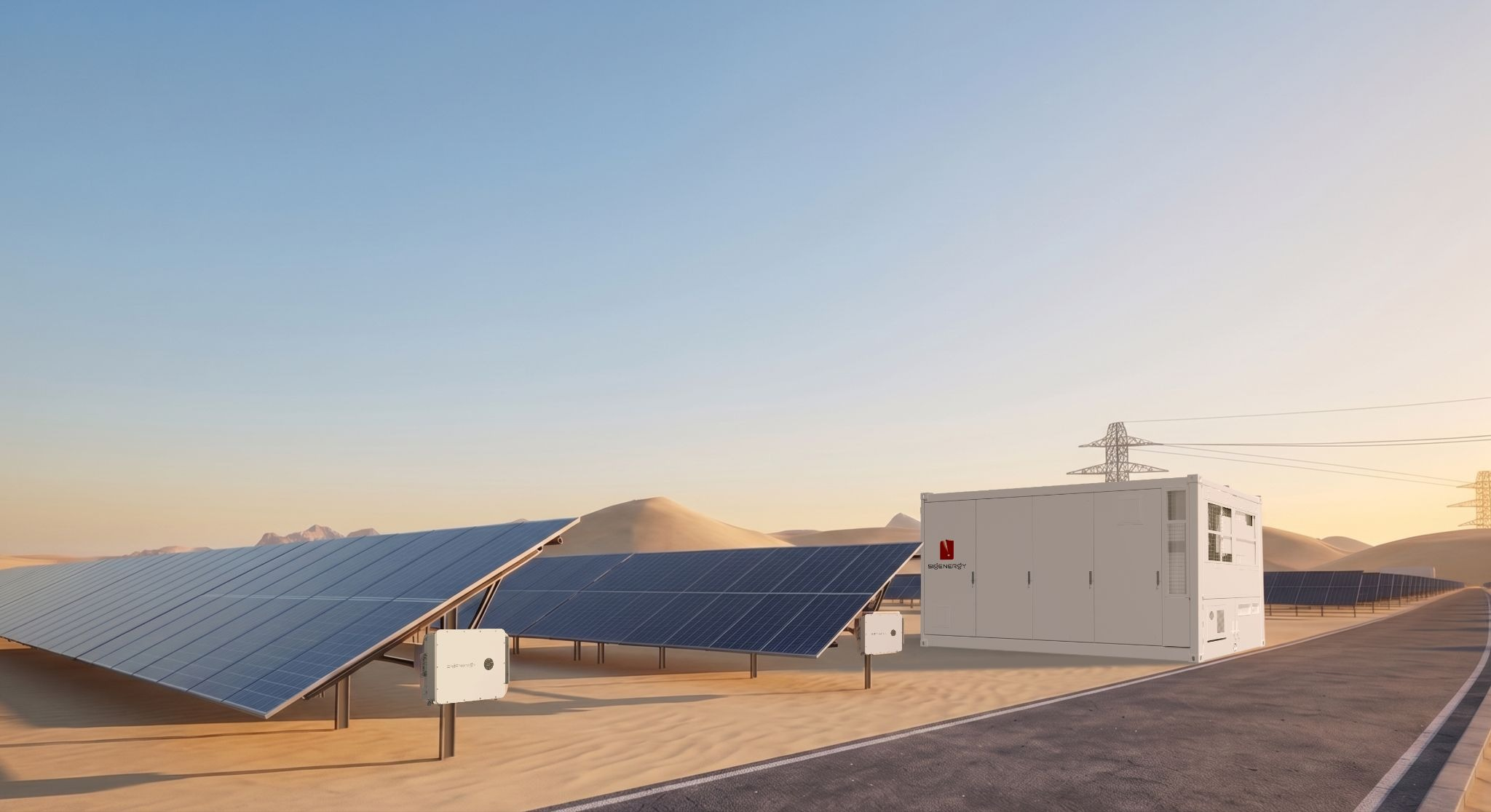
Big solar has entered a new, more complex phase. But it is also a period in which new approaches to project design are unlocking the next wave of value. With its Utility PV Solution, Sigenergy is bringing a distributed power conversion topology, advanced BESS integration, and a new approach to large-scale solar deployment – and it's serious about its mission.
Under bright spring skies, amid the rolling green hills of Germany's south west, more than 80 solar professionals got up close and personal with the cutting edge of PV and battery energy storage system (BESS) innovation. And the rapid pace of change sweeping through the industry was on full display.
On May 28, 2026, disruptive power electronics and BESS manufacturer Sigenergy welcomed industry partners, researchers, and representatives from local utilities to an event in the picaresque Baden-Württemberg countryside for Sigenergy Connect – an event based on the exchange of ideas and insights regarding solar and storage solutions for the fast-emerging next phase of the energy transition.
With evolving electricity market dynamics creating opportunities for innovative hybrid solar-plus-BESS projects in the region, and increasingly across Germany and throughout Europe, the renewable energy sector has entered a period of rapid transformation — one that promises to unlock significant value. New approaches to project design and deployment are emerging, with the potential to transform not only the clean energy industry, but electricity networks.
Speaking at Sigenergy Connect, Elena Pabst, a researcher with the Center for Solar Energy and Hydrogen Research Baden-Württemberg (ZSW), explained that grid bottlenecks are quickly becoming one of the biggest constraints on continued renewable energy expansion. During periods of high solar generation – during the day – available grid capacity is often insufficient to absorb all of the solar electricity being produced. Pabst highlighted increased BESS deployment – especially when paired with renewable generation such as solar PV – as one of the most effective solutions to these limitations.
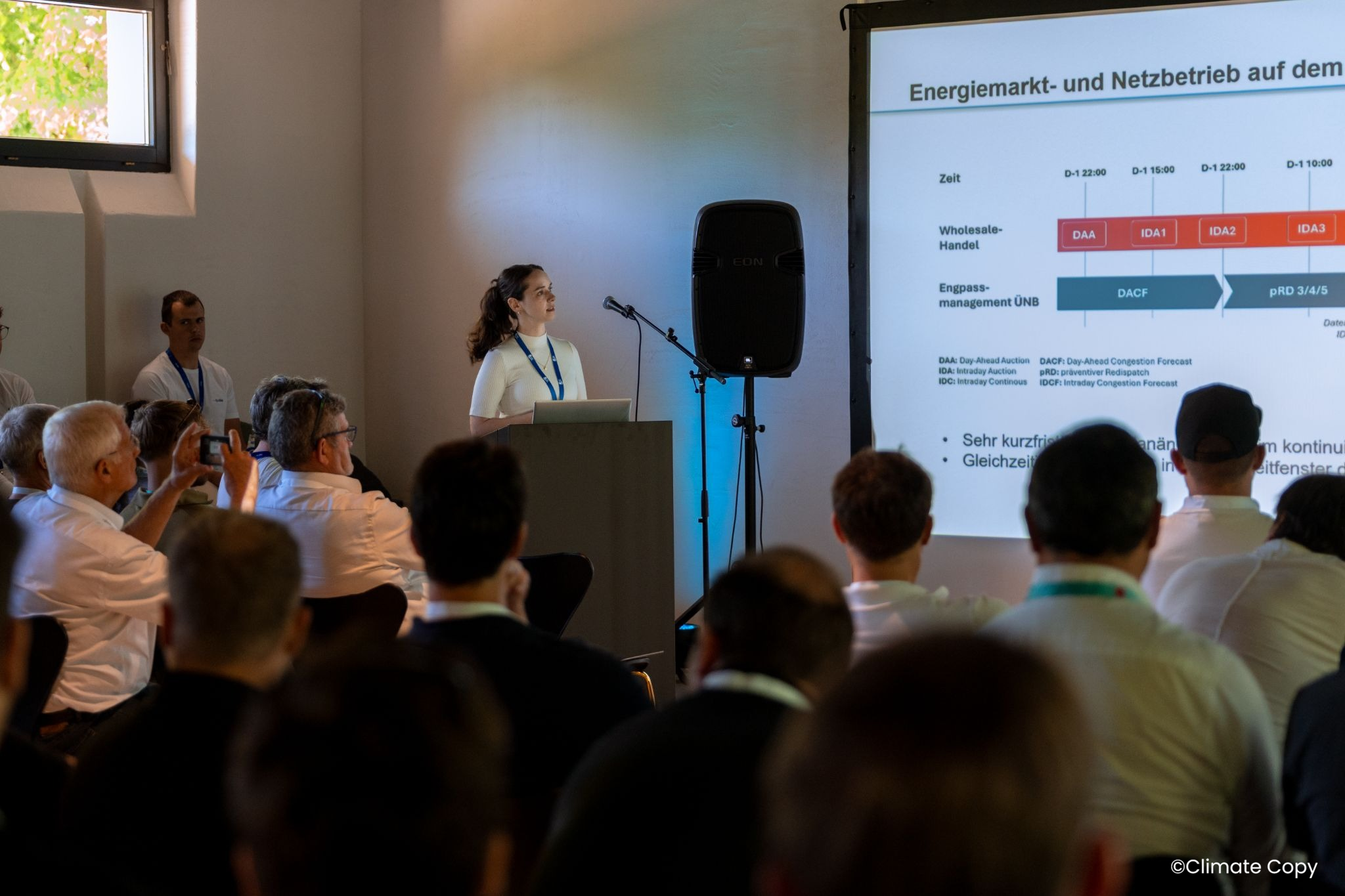
Pabst also shared insights from two ZSW research projects exploring the future role of energy storage in Germany. HybrEEd is demonstrating how hybrid renewable energy and BESS projects can make more efficient use of grid connection points, while the STRIVE.BW project is exploring how batteries can support electricity networks by flexibly charging and discharging according to real-time grid conditions.
At the event in May, these concepts moved from theory to practice, with attendees able to see a real-world demonstration of these capabilities.
At the ZSW test field near the historic village of Widderstall, Baden-Württemberg, an innovative hybrid solar-plus-BESS system is demonstrating how PV and storage technologies can be effectively integrated — and the role they can play in relieving grid bottlenecks while maximizing the use of solar energy generated onsite.
At the Widderstall test site, local utility EnBW – Germany's third-largest energy company, serving more than 5.5 million customers – has installed a 252 kWh DC-coupled BESS in a hybrid configuration alongside a 70 kW ground-mounted solar array. The project is designed to showcase the performance benefits of the architecture and validate its operational strategy in real-world conditions.
Speaking at Sigenergy Connect, Richard Riedlinger, Technical Planning, PV Project Development at EnBW, outlined the advantages that DC-coupled storage can deliver. Compared to AC-coupled systems, DC-coupled BESS architectures require fewer components, can achieve higher efficiency, and enable more PV-generated electricity to be captured and utilized.
Following the event, Sigenergy Key Account Manager for the DACH region Sebastian Feges noted that while AC-coupled BESS configurations have historically been the default approach, the market is beginning to shift. "The industry is increasingly recognizing that operating under direct current (DC) is not only safe but also delivers significant efficiency gains," said Feges.

The adoption of DC-coupled BESS is just one of several technological and market shifts currently reshaping the utility-scale solar segment – and Sigenergy is positioning itself at the forefront of these developments.
In 2026, Sigenergy launched its Utility PV Solution, building on the success of its stackable BESS platforms for residential and commercial and industrial (C&I) applications – SigenStor and SigenStack, respectively – as well as its advanced power electronics portfolio, including microinverters for rooftop applications. The solution's distributed power conversion architecture is designed to deliver a lower levelized cost of energy (LCOE), enhanced system safety and reliability, and advanced operations and maintenance (O&M) capabilities.
The Sigenergy utility-scale platform comprises 460 kW string inverters, the SigenTerra utility-scale storage solution, the SigenMVT Transformer Station, Sigen CommBox, and Sigen Datalogger. The platform can be paired with batteries in either an AC- or DC-coupled configuration, providing project developers with greater flexibility and the potential for higher energy yields.
The adoption of string inverters in utility-scale applications has been gaining momentum in Europe since the late 2010s. S&P Global forecasts that in 2026 string inverters will account for almost 78% of the utility-scale inverter market in Asia, and more than 60% in the EMEA region.
"There are still central inverter strongholds," said Cormac Gilligan, a Director of Cleantech with the analyst. "S&P Global Energy notes that central inverters accounted for at least 95 percent of total shipments to utility scale in both the United States and Australia in 2024."
Central (orange) vs. String (blue) Market Share by Geogra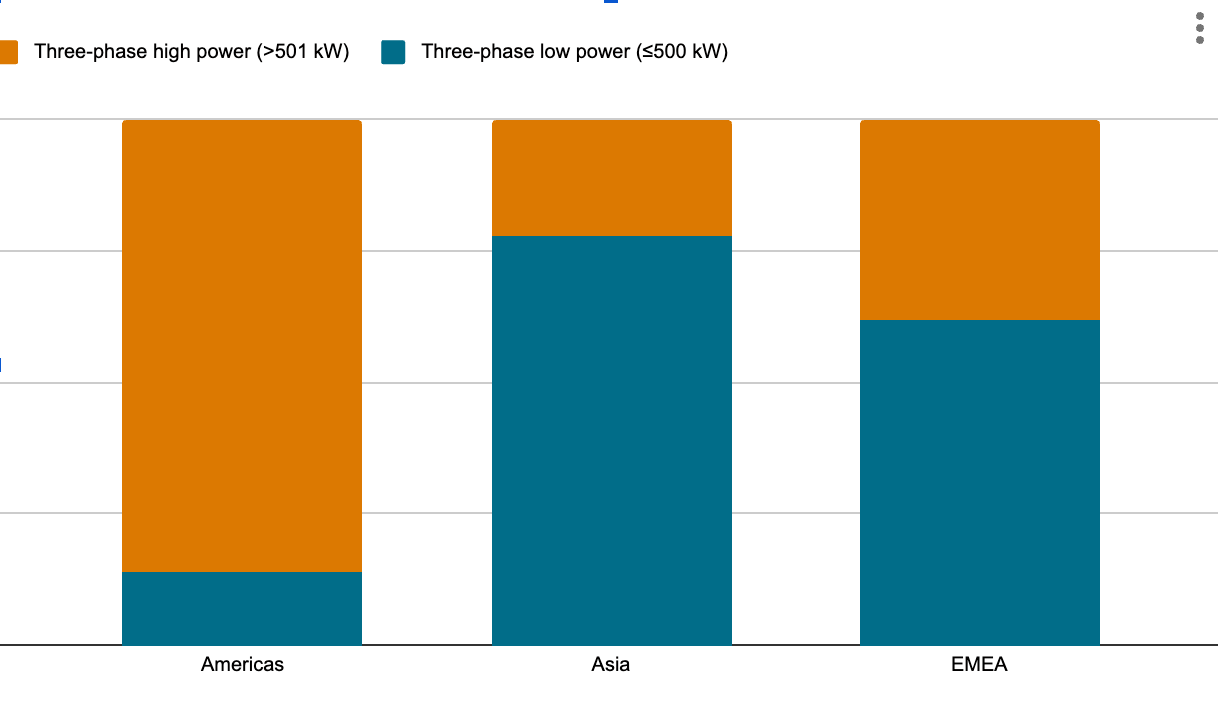
Source: S&P Global: PV inverter market tracker – H2'25'
"The centralized inverter topology can definitely be improved on," said Gregory Lukens, Director of EU Sales for the utility-scale market segment at Sigenergy. "The better way is through decentralization. There are many other technologies that embrace decentralization – like a CPU, which has different cores. Decentralizing and removing bottlenecks is key; it is a positive attribute, and today it is cost competitive."
Lukens added that string inverters also provide significant O&M advantages. Through a "swap-and-replace" model, faulty units can be exchanged with spares kept onsite, minimizing downtime and limiting impacts to system performance. By contrast, failures in central inverter systems can affect megawatts of generation while project owners wait for replacement parts or specialized-technician availability.
String inverters also provide advanced DC-side protection at the string level, including the ability to detect loose connectors and arc faults within a 500 m range.
O&M workflows are further optimized in the Sigenergy utility-scale solution through digital tools including inverter and component geo-tagging, MPPT-level insulation fault location, and guided commissioning inspections – all managed via a mobile app. "We listen to the EPC, so we've got different things like geo-tagging so that each inverter can be located easily," said Lukens.
String-based utility-scale architectures also offer significant logistical and project-design advantages. In its Power Inverter Market Outlook 2026, BloombergNEF notes that string inverters can have considerably shorter lead times than central inverters – with lead times for some central inverter solutions up to 80% longer, according to its analysis.
Inverter order lead time in 1Q 2026

Source: BloombergNEF. This includes lead times for solar inverters and PCS.
"The shorter lead times for string inverters push some EPC providers to favor string inverters over central," reported BloombergNEF. "String inverters have a lower power rating than central inverters, allowing them to be combined more flexibly across a wider range of project sizes. They also require less installation equipment because they are smaller and do not need cranes or cement bases. This makes them easier to deploy across different projects. EPC providers can hold string inverters in stock and allocate them where needed with minimal delay."
While string-based architectures offer a range of advantages, it is in terms of energy yield that the Sigenergy Utility PV Solution stands out. Featuring a true string inverter architecture and advanced multi-MPPT technology, the platform is designed to significantly reduce string mismatch losses and maximize energy production.
"We maintain two strings per MPPT," explained Lukens. "This basically guarantees a higher yield. With 1500V DC input, the system delivers up to 1000V AC output, with an option for 800 V. We want to give that yield back to the customer."
With benefits extending across the utility-scale solar value chain – from developers and asset owners to EPCs and operations teams – Lukens expects the Sigenergy solution to be well received across European markets. And it's an expectation further strengthened by the company's strategic expansion.
On April 16, Sigenergy listed publicly on the Hong Kong Stock Exchange, attracting an impressive collection of institutional investors. It inaugurated a new 136,000 square meter manufacturing campus in Nantong on March 13 with the capacity to produce up to 300,000 battery packs and inverters a year – complimenting its existing Shanghai facilities and creating a regional talent-acquisition and production hub. And with AI built into the company's strategy, it is ideally positioned for the fast-emerging, more complex, phase of utility-scale solar and BESS development.
"Bankability is extremely important in this industry," said Lukens. "And I think organizationally, technologically, geographically, we're really in a strong position. Financially, we are in a strong position as well. The company has turned a profit in a record timeframe and completed its IPO in under four years."
While distributed applications will remain crucial to continued PV expansion, utility-scale solar remains a driving force behind global solar and storage growth. In its latest Photovoltaic Power Systems Programme (PVPS) report, the International Energy Agency (IEA) found that utility-scale systems accounted for 60% of global PV capacity installed in 2025.
However, with solar penetration rates climbing to 15% and beyond across a growing number of European markets, the IEA notes that challenges including curtailment, grid congestion, and low daytime wholesale electricity prices are creating an increasingly complex environment for project developers.
Innovations such as the DC-coupled storage system at the Widderstall test site are demonstrating pathways for the industry to overcome these challenges. Flexible, safe, and high-performance power conversion platforms, such as the Sigenergy Utility PV Solution, represent another important piece of the puzzle – or, as Lukens describes it, part of the company's long-term ambition.
"This is the final goal," said Lukens. "This isn't a hobby; it's really something that we're going for."




 Cookie Set

These cookies are essential for the proper functioning of my website. Without these cookies, the website would not work properly
| Name | Expiration | Description |
| PHPSESSID | session | Cookie generated by applications based on the PHP language. This is a general purpose identifier used to maintain user session variables. It is normally a random generated number, how it is used can be specific to the site, but a good example is maintaining a logged-in status for a user between pages. |
| cookielist-consent | 1 year | Sets this cookie to remember users' consent preferences so that their preferences are respected on their subsequent visits to this site. It does not collect or store any personal information of the site visitors. |
| sl-session | 1 day | Anti-crawler and machine behavior recognition |
Analytical cookies are used to understand how visitors interact with the website. These cookies help provide information on metrics such as the number of visitors, bounce rate, traffic source, etc.
| Name | Expiration | Description |
| _ga | 1 year | The _ga cookie, installed by Google Analytics, calculates visitor, session and campaign data and also keeps track of site usage for the site's analytics report. The cookie stores information anonymously and assigns a randomly generated number to recognize unique visitors. |
| _ga_6JGTHLPYFN | 1 year | This cookie is installed by Google Analytics. |
| _gcl_au | 3 months | Provided by Google Tag Manager to experiment advertisement efficiency of websites using their services. |