


Necessary



 Login
 Global (English)
05 Nov, 2026
Share
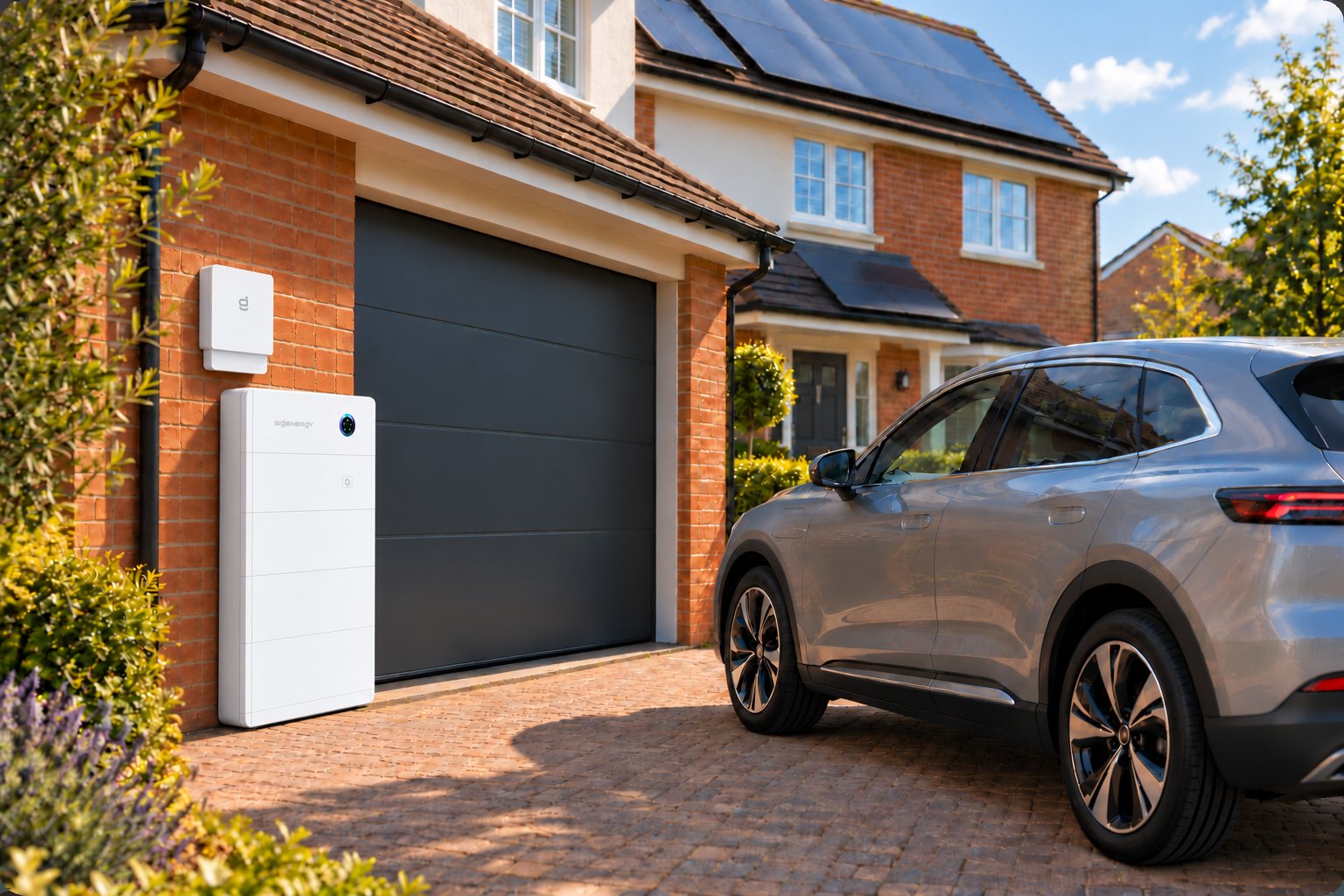
Bidirectional charging allows an electric vehicle to receive electricity and send stored energy back through compatible equipment. With the right setup, that energy can support your home or flow to the grid. Your car is compatible only when its discharge capability, software, charging interface and installed energy system work together.
At Sigenergy, we connect EV charging with solar generation and home battery storage through SigenStor and the Sigen EV DC Charging Module. Our recommendation is to assess the complete installation before relying on a vehicle for backup.
For a homeowner considering Sigen EV DC, the main applications are vehicle-to-home and vehicle-to-grid. They use the car's stored energy for different purposes and require different checks before installation.
| Function | Where the energy goes | What to verify |
|---|---|---|
| Vehicle-to-home (V2H) | From the EV battery to household loads. | Vehicle discharge support and a correctly configured home backup system. |
| Vehicle-to-grid (V2G) | From the EV battery to the electricity network. | Vehicle support, permitted grid export and any participating service requirements. |
| Vehicle-to-load (V2L) | From a vehicle outlet or suitable adapter to individual appliances. | The vehicle's outlet rating and supported loads; V2L alone does not establish V2H or V2G compatibility. |
To check your car: find its model and region in our V2X compatibility table → verify discharge support and software → confirm the charger connection → check the home system and local requirements. This assessment concerns your vehicle with Sigen EV DC and SigenStor, rather than every bidirectional EV charger.
If keeping essential circuits running during an outage is the priority, start with V2H. If exporting vehicle energy is the objective, investigate V2G availability with the local network and service provider. The broader V2X family includes these different applications.
For V2G, a useful assessment starts with when the car is connected and how much energy can be released after allowing for driving. Discuss export limits, eligible operating periods and settlement arrangements before estimating a return. A household that needs the vehicle every evening has a different opportunity from one that can leave it plugged in through that period. Select the application around that availability.
Charging sends energy through the charger into the car's direct-current (DC) battery. Reverse operation releases stored DC energy through a compatible connection. With SigenStor, Sigen EV DC connects the vehicle to the system, and the Sigen Energy Controller converts DC electricity into alternating current (AC) for household loads. During an outage, the backup system also isolates the home from the public grid and switches to local power sources.
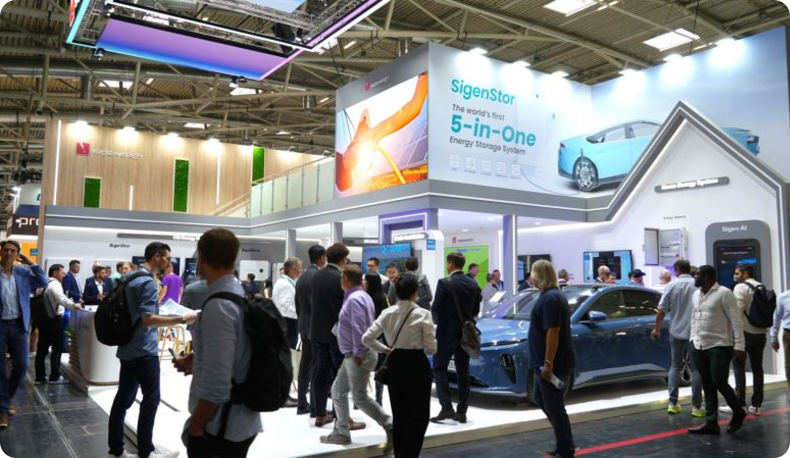
We bring solar generation, battery storage and EV charging together in SigenStor, our modular, 5-in-one home energy system. It integrates a solar inverter, EV DC charger, battery power conversion system (PCS), battery pack and energy management system (EMS). The PCS converts power for storage and use, while the EMS coordinates energy flows. Your selected configuration determines the components and functions included.
Sigen EV DC connects your vehicle to this energy system through a DC-coupled architecture, allowing solar electricity to charge the car directly. With a compatible vehicle and the required functions enabled, energy can also flow back from the EV. Our integrated approach brings vehicle charging, solar production and stationary storage into the same energy management setup.
For UK installations, our SigenStor EVDC 12 uses CCS2 and operates across 150–1000 V. Maximum charging and discharging port power is 12.5 kW in Standard mode and 25 kW in License boost mode. Eligible units can receive the upgrade through a license purchased via Sigen Mall or local distributors. These specifications apply to the UK configuration covered by the Sigen EV DC datasheet, version 20260609. The module requires a Sigen Energy Controller, and the power upgrade remains separate from the vehicle’s ability to discharge.
We recommend sizing the complete power path around the charging and backup functions you need. The EV port rating is one part of that assessment: actual power also depends on the vehicle and installed system. A 25 kW EV port does not guarantee 25 kW at household AC circuits, so the installer should identify the component that limits output in your configuration.
Keeping a stationary battery within your SigenStor configuration gives the home an energy resource when the car is away. For a household that uses its vehicle throughout the working day, size stationary storage around the home’s needs during those hours. Then assess how a compatible EV can supplement that storage when it returns.
Our independent V2X field testing includes the following configurations. These examples illustrate regional and interface differences; they are not a recommended vehicle list.
| Vehicle tested | Interface | Test location | Test date |
|---|---|---|---|
| Kia EV6, 2023 | CCS1 | Canada | September 11, 2025 |
| Xpeng G6 | GB/T | China | March 13, 2026 |
Our V2X test records include continuous discharge sessions that meet any one of three criteria: at least 10 kWh discharged, at least 15 minutes of operation, or a battery state of charge (SOC) reduction of at least 10%.
These independent tests demonstrate discharge with specific vehicle and equipment combinations; they do not represent vehicle-manufacturer certification or endorsement. Some setups use third-party adapters, so the CCS1 and GB/T examples require a separate connection assessment for a UK CCS2 installation.
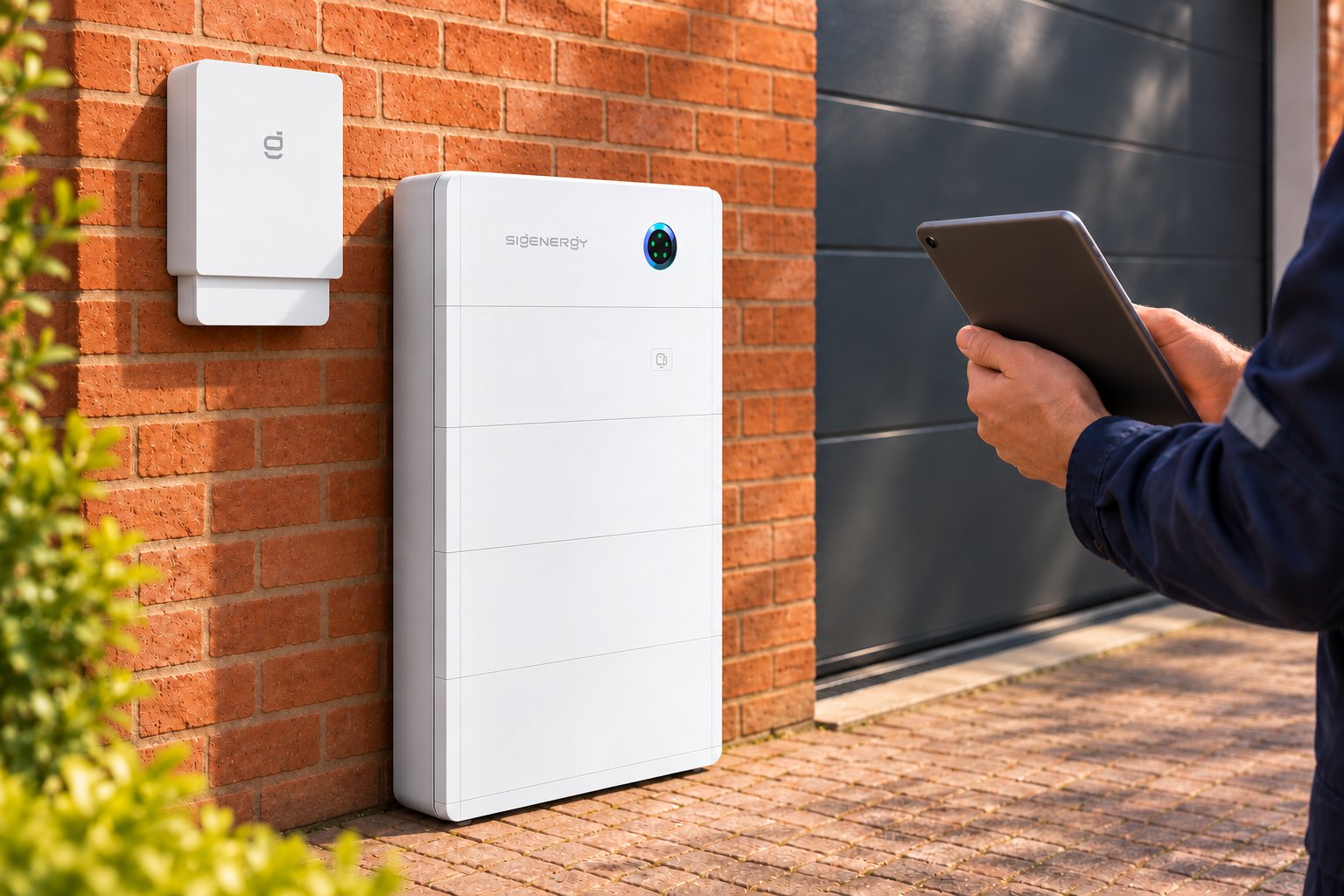
We separate the compatibility decision into three practical outcomes:
Use these five checks to establish which outcome applies:
When a car has not been confirmed for the intended reverse-power function, plan around its verified charging capabilities. Treat future vehicle support as a separate decision from today's backup design.
If your car is at home during sunny hours, Sigen EV DC offers PV Surplus Charging, with adjustable priority between the car and household loads. A longer connection window gives this mode more time to use surplus generation as solar output and household demand change.
For a top-up when current solar output is insufficient, Battery Boost Charging adds energy from stationary storage. Its cut-off SOC setting preserves the selected stationary-battery reserve, so the energy available to the car depends on how much charge remains above that threshold.
When departure time is close, Fast Charging can combine available solar, grid and stationary-battery power within system limits. Check the expected charging rate against the time remaining before departure to judge whether it can meet your target.
During an outage, Sigen Energy Gateway detects the grid failure and manages the transition to backup in a configured SigenStor system. Size backup around essential circuits, checking available energy, continuous output and appliance startup demands. The Sigen Energy Gateway Home Series User Manual, section 2.5 covers the backup wiring context.
Hypothetical runtime example: assume 60 kWh of usable EV battery capacity, 80% starting SOC, a 30% driving reserve and 90% delivery efficiency. Available household energy is approximately 60 × (80% − 30%) × 90% = 27 kWh, or about 18 hours at an average 1.5 kW load. These assumed values illustrate the calculation; actual runtime varies with standby consumption, changing loads and system limits.
The mySigen App helps you follow system energy flows. Its Battery Energy Source view shows the composition of energy stored in the stationary battery, including contributions from EV DC, solar PV, external inverters, generators and the grid.
At commissioning, use this visibility with your installer to check solar charging priority, stationary-battery reserve settings and the agreed V2H backup operation. Record the results for future reference.
For an initial discussion, share your vehicle model, year, country and backup goals, such as which household circuits you want to keep running during an outage.
Contact Sigenergy to discuss SigenStor and Sigen EV DC for your project. During equipment selection, your installer can help confirm the intended V2H or V2G function, check the software version and charging interface, and prepare the equipment schedule and any required adapter list. At commissioning, they should test the agreed functions and complete the commissioning acceptance record.
Only if its hardware supports the upgrade. Software can enable supported features, but it cannot add missing reverse-power hardware. Ask the manufacturer about upgrade options and have an installer assess whether existing cabling and protection can be reused.
There is no single installed price. For a SigenStor project, we suggest requesting an itemised quote covering Sigen EV DC, any necessary SigenStor additions, backup equipment, electrical work and commissioning. Compare quotes covering the same equipment and installation scope.
It can add wear, but the impact varies. Temperature, operating SOC range, discharge depth and total energy throughput influence battery ageing. Occasional outage backup involves a different cycling pattern from daily V2G operation.




 Cookie Set

These cookies are essential for the proper functioning of my website. Without these cookies, the website would not work properly
| Name | Expiration | Description |
| PHPSESSID | session | Cookie generated by applications based on the PHP language. This is a general purpose identifier used to maintain user session variables. It is normally a random generated number, how it is used can be specific to the site, but a good example is maintaining a logged-in status for a user between pages. |
| cookielist-consent | 1 year | Sets this cookie to remember users' consent preferences so that their preferences are respected on their subsequent visits to this site. It does not collect or store any personal information of the site visitors. |
| sl-session | 1 day | Anti-crawler and machine behavior recognition |
Analytical cookies are used to understand how visitors interact with the website. These cookies help provide information on metrics such as the number of visitors, bounce rate, traffic source, etc.
| Name | Expiration | Description |
| _ga | 1 year | The _ga cookie, installed by Google Analytics, calculates visitor, session and campaign data and also keeps track of site usage for the site's analytics report. The cookie stores information anonymously and assigns a randomly generated number to recognize unique visitors. |
| _ga_6JGTHLPYFN | 1 year | This cookie is installed by Google Analytics. |
| _gcl_au | 3 months | Provided by Google Tag Manager to experiment advertisement efficiency of websites using their services. |