


Necessary



 Login
 Global (English)
05 Nov, 2026
Share
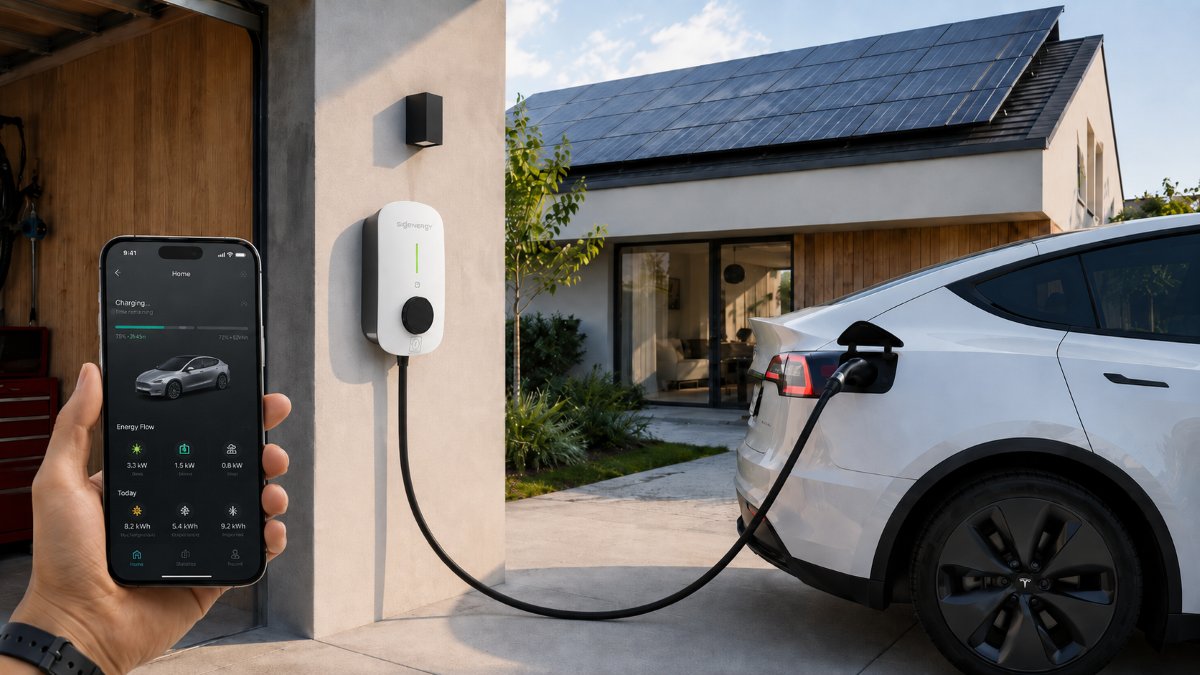
For most EV drivers, the car does not need power the second it plugs in. It needs enough range for the next drive. That difference is where smart EV charging creates value.
At Sigenergy, our team sees smart charging as a practical home energy decision, not a technical extra. It is not about making charging more complicated. It is about helping the charger respond to real conditions: electricity prices, solar production, household demand, battery status, grid signals, and the driver's schedule.
A smart EV charger is a connected charging device that can exchange information with the vehicle, the user, the home energy system, and sometimes the grid. A conventional charger mainly delivers power. A smart charging system decides when to deliver power, at what level, and from which available energy source.
For the driver, the experience should stay simple: plug in, set a target if needed, and leave with enough range. The intelligence happens in the background.
The charger may delay charging until off-peak prices apply, reduce output when the home is near its electrical limit, prioritize surplus solar, or adjust the schedule if the departure time changes. The user should not have to manage every kilowatt-hour manually.
| Feature | Normal EV Charging | Smart EV Charging |
|---|---|---|
| Charging time | Starts when plugged in | Starts, pauses, or adjusts based on rules |
| Electricity price | Usually ignored | Can respond to time-of-use or dynamic tariffs |
| Solar use | Not automatically optimized | Can prioritize surplus PV energy |
| Home load | May add stress during peak use | Can reduce power to help prevent overload |
| User visibility | Limited or manual | App-based monitoring and control |
| Future grid role | Mostly one-way charging | Can support V2H, V2G, or demand response where available |
The value of a smart EV charger is not that it always charges faster. The value is that it charges at the right time, at the right power level, using the best available energy source.
For users, the practical outcomes are clearer: reduce energy waste, better solar self-consumption, lower the risk of home overload, more predictable readiness before departure, and better visibility in the app.
A typical smart charging process can be understood in five steps.
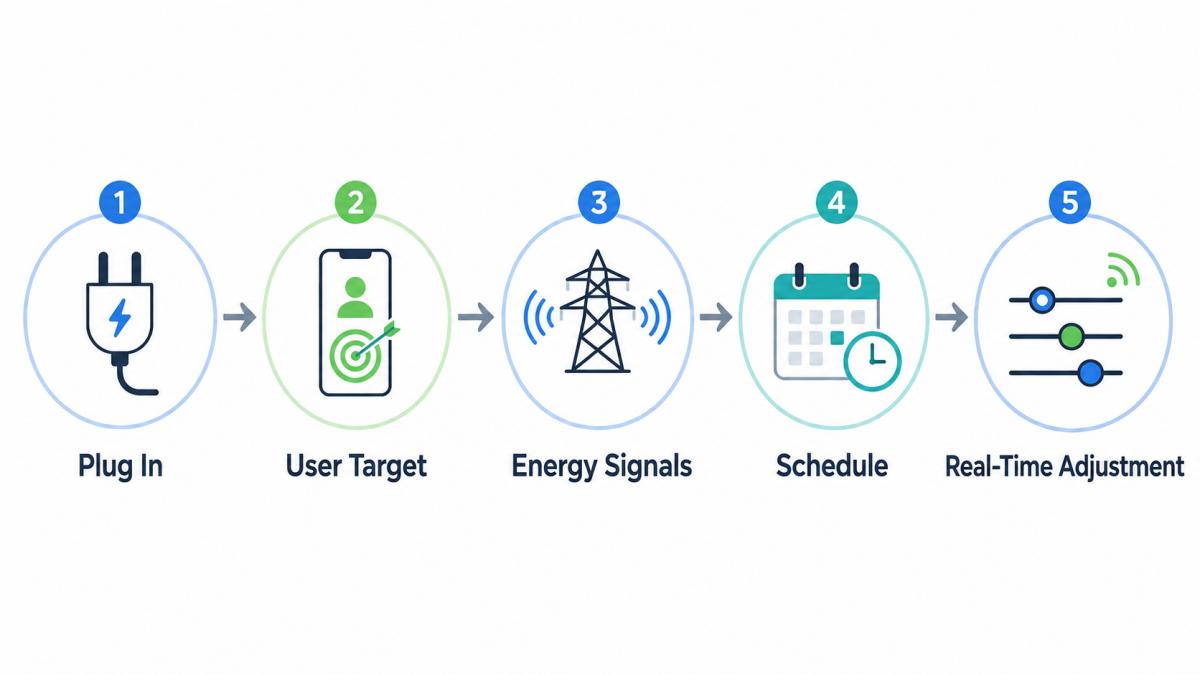
These five steps turn charging from a fixed start-and-stop event into a plan that can be recalculated during the session. If solar output falls, household demand rises, or electricity prices change, the charger can reduce, pause, or reschedule charging while still working toward the driver’s departure target.
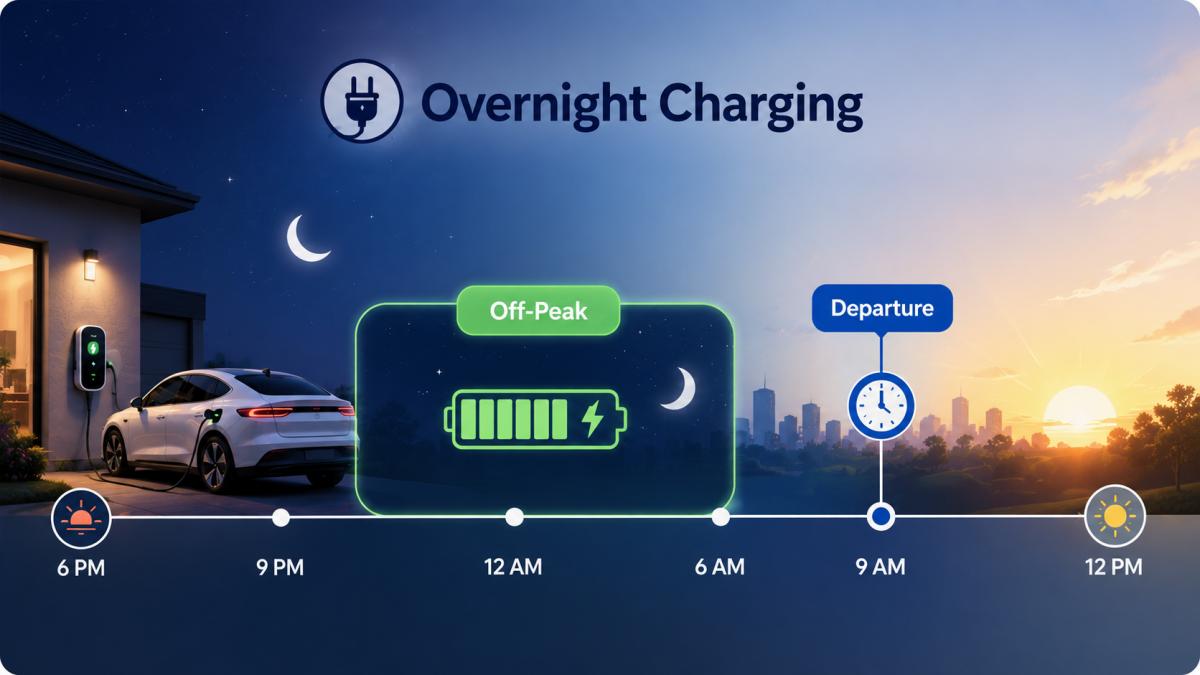
Fast charging matters on long-distance trips, but home charging follows a different pattern. When an EV remains parked for several hours, the charger has time to shift demand into lower-price periods, use surplus solar, and reduce output when household demand rises. The IEA estimates that more than 43 million private light-duty vehicle charging points were in use worldwide in 2025. Survey data cited in the same report indicates that EV owners charge privately—at home or at work—almost 75% of the time.
In these settings, the vehicle often remains connected for longer than it actually needs to draw power. A higher-rated charger can shorten the minimum charging time, but it does not necessarily improve the daily charging experience once the required energy can already be delivered before departure. The unused portion of the parking window gives a smart EV charger room to pause, reduce, or increase charging without affecting vehicle readiness.
This flexibility is what allows the system to respond to changing conditions rather than charging continuously at its maximum output. It can wait for a lower tariff, increase charging when more solar energy becomes available, or, with compatible load-management hardware, temporarily reduce EV demand when other household appliances require more power. For daily charging, the more useful question is therefore not simply “How high is the maximum charging power?” but “Can the system deliver the required energy before departure while coordinating price, solar availability, and household capacity?”
| Type | Best Use | Typical Strength | Smart Charging Role | Sigenergy Example |
|---|---|---|---|---|
| AC charging | Daily home charging | Practical for longer parking periods | Scheduling, tariff optimization, solar use, load management | Sigen EV AC Charger |
| DC charging | Shorter charging windows or bidirectional home-energy applications | Higher power and potential bidirectional flow | Fast home energy transfer, V2H, V2G, where supported | SigenStor EV DC |
AC smart charging is best suited for daily home charging. It works well during long parking hours and supports scheduling, tariff optimization, solar use, and load management through our Sigen EV AC Charger.
DC smart charging is better suited for faster charging and advanced home energy use. With higher power and potential bidirectional flow, our SigenStor EV DC supports fast home energy transfer, V2H, and V2G where the vehicle, site, standards, and utility rules allow.
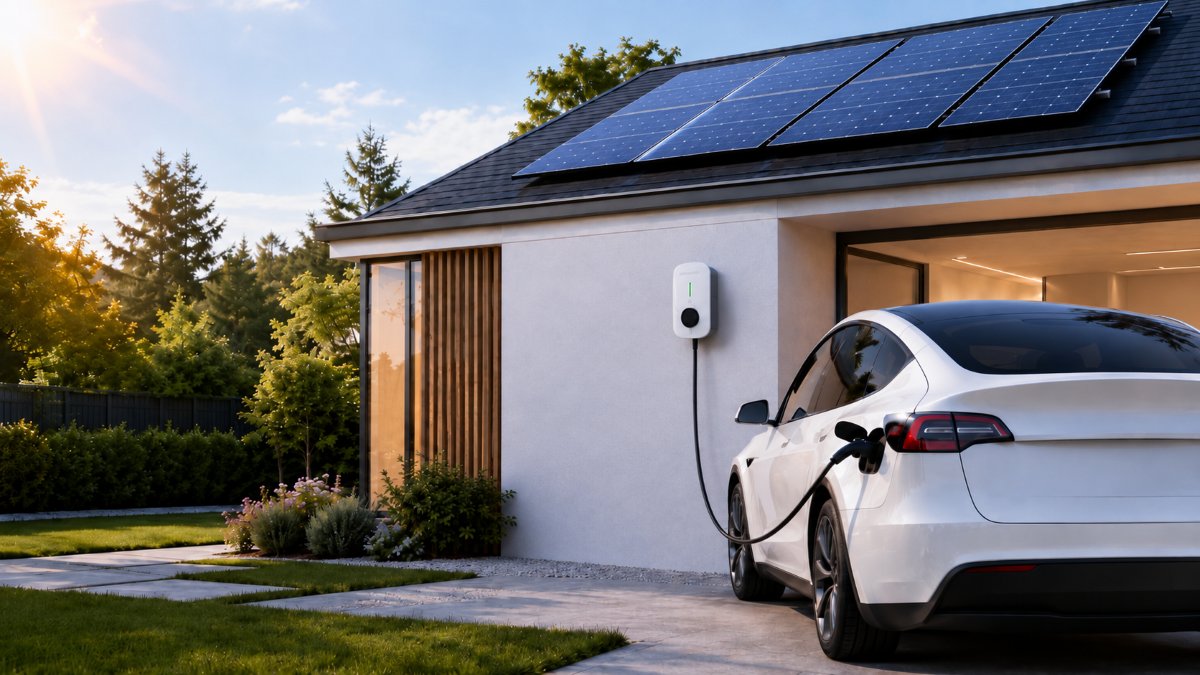
For a home with rooftop solar, a smart EV charger can turn spare daytime electricity into miles. Instead of exporting every extra kilowatt-hour, the home can direct more of that clean energy into the EV when conditions are right.
A practical pattern is solar-first charging during strong daytime PV generation, then off-peak charging at night if the tariff makes grid electricity cheaper. This matches real life: sunlight during the day, lower tariffs overnight, and driving in between.
Home batteries add another layer of flexibility. If solar generation is high while the vehicle is away or not connected to the charger, the home battery can store energy for later use. When the vehicle returns, a compatible energy-management system can use stored solar energy, off-peak grid electricity, or a configured combination of both.
This is where smart charging becomes home energy coordination, not just EV charging.
When evaluating a smart EV charging system, three qualities matter: transparency, real-world resilience, and clearly defined compatibility.
Transparency means users can see what the system is doing. If charging starts later, slows down, or switches to solar power, through the mySigen App, the user should be able to see whether the reason is off-peak pricing, surplus PV generation, household load, or a preset departure time.
Real-world resilience matters because an EV charger is not a small indoor device. It may work outdoors for years. Users should check protection ratings, operating temperature ranges, certified installation requirements, and local electrical codes before choosing a system.
Honest compatibility is especially important for V2H and V2G. The IEA vehicle-to-grid technology analysis explains the potential value of controlled charging and bidirectional power flow. However, it also makes clear that scalable V2G depends on compatible vehicles, chargers, communication protocols, regulations, and incentives.
In short, trust comes from a system that explains its choices, handles real-world conditions, and clearly states what it can and cannot do.
When choosing a smart EV charger, start with your daily routine rather than the spec sheet. Before comparing smart features, confirm the vehicle’s charging limit and connector, the site’s single- or three-phase supply, and the available household electrical capacity.
Ask practical questions: Will it work with your electricity tariff? Can it prioritize surplus solar? Can it coordinate with a home battery? Does it reduce charging power when the home is under load? Is the app clear enough for daily use? Can a certified installer set it up correctly? Do you actually need V2H or V2G, and is your vehicle compatible?
A useful checklist includes:
For owners planning a whole-home energy setup, choose a charger that integrates with solar, storage, and the energy management app rather than treating EV charging as an isolated device. A certified installer can help match the charger to the site, vehicle, tariff, and future energy goals.
The best charging experience is simply having your vehicle ready, electricity costs lower than expected, solar power fully utilized, waste avoided, and household electricity consumption kept within safe limits. Drivers don't need to worry about every kilowatt-hour consumed.
Our philosophy is simple: smart charging should free users from worrying about charging decisions while maintaining clear control over the charging process. Smart charging functions effectively when the vehicle is ready, the energy choice is appropriate, and the system can interpret the charging method.
A smart EV charger is more than just a plug; it's part of your home's energy decision-making process. For EVs, this is where convenience, cost, and clean energy finally converge perfectly.
EV charging becomes smart when the charger can communicate with software, the vehicle, the user, and energy signals such as tariffs, solar output, battery status, or household load.
Yes. A compatible system can prioritize surplus solar energy, helping the home use more self-generated electricity for driving instead of sending it directly to the grid.
Delayed charging itself does not harm the battery. The vehicle’s battery management system still controls battery protection. Users should follow the vehicle maker’s charging limits and recommendations.
No. V2H and V2G depend on the EV model, charger hardware, local standards, and grid or utility rules. Buyers should confirm compatibility before making a purchase decision.
AC charging is usually enough for daily home charging because the car is parked for many hours. DC charging can be useful when faster charging or bidirectional home energy functions are needed.





 Cookie Set

These cookies are essential for the proper functioning of my website. Without these cookies, the website would not work properly
| Name | Expiration | Description |
| PHPSESSID | session | Cookie generated by applications based on the PHP language. This is a general purpose identifier used to maintain user session variables. It is normally a random generated number, how it is used can be specific to the site, but a good example is maintaining a logged-in status for a user between pages. |
| cookielist-consent | 1 year | Sets this cookie to remember users' consent preferences so that their preferences are respected on their subsequent visits to this site. It does not collect or store any personal information of the site visitors. |
| sl-session | 1 day | Anti-crawler and machine behavior recognition |
Analytical cookies are used to understand how visitors interact with the website. These cookies help provide information on metrics such as the number of visitors, bounce rate, traffic source, etc.
| Name | Expiration | Description |
| _ga | 1 year | The _ga cookie, installed by Google Analytics, calculates visitor, session and campaign data and also keeps track of site usage for the site's analytics report. The cookie stores information anonymously and assigns a randomly generated number to recognize unique visitors. |
| _ga_6JGTHLPYFN | 1 year | This cookie is installed by Google Analytics. |
| _gcl_au | 3 months | Provided by Google Tag Manager to experiment advertisement efficiency of websites using their services. |