


Necessary



 Login
 Global (English)
05 Nov, 2026
Share
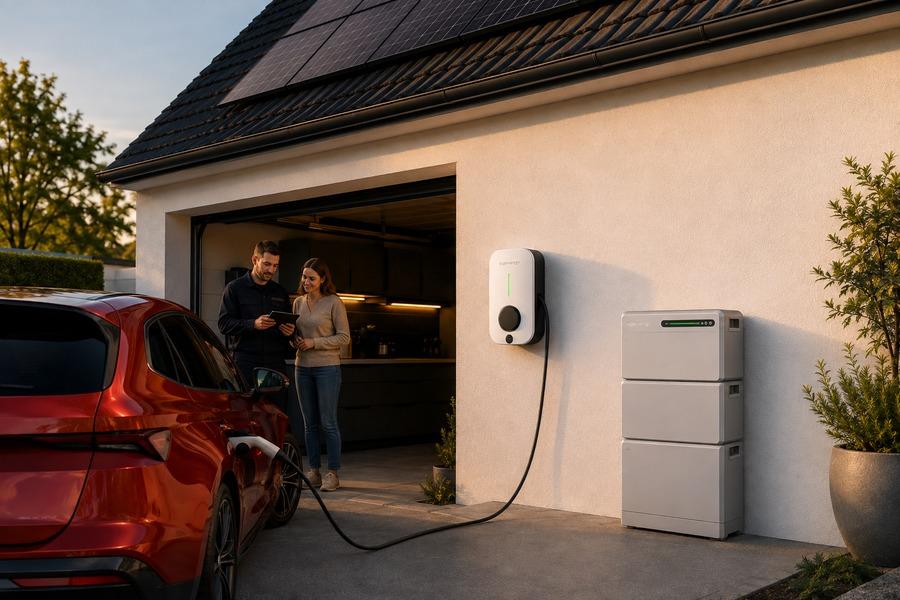
AC coupled battery storage is most valuable when a project has a high share of PV exports, time-of-use tariffs that reward shifting solar into evening demand, or backup loads that must remain powered without replacing a healthy existing inverter. In those cases, a much larger share of what a renewable system generates can be used on site rather than exported for little value. We usually approach this question through four practical project scenarios: retrofitting an existing PV system, adding dependable backup, coordinating solar storage with EV charging, and expanding C&I sites without redesigning the whole energy system. How much of that potential a project actually captures is decided by the design around the battery. We work every day with installers and project developers who reach this topic from a very practical starting point, an existing PV array that exports too much, a bill that keeps climbing, or an outage that lasted longer than anyone expected. The battery matters. So do the conversion path, the power conversion stage, the control logic, the backup transfer, and the headroom left for future expansion.
An AC coupled battery is a storage block with its own inverter or PCS, connected on the alternating current side of a system that already generates power. The existing solar inverter carries on doing its job, and the battery behaves as a separate device that charges from whatever surplus reaches the AC busbar. That separation is the reason the approach became popular for retrofits, because the generation side of the plant stays largely untouched.
The trade-off is mainly in the conversion path. In a typical AC coupled system, solar power is converted from DC to AC, then back to DC for battery charging, and finally to AC again when used by loads. This makes AC coupling practical for retrofits, but efficiency should still be checked against the selected system design. Our SigenStack shows how integrated storage architecture can reduce extra equipment and improve efficiency in solar-plus-storage projects. We align the configuration with the project: SigenStor with Sigen Energy Gateway for residential and small-business retrofit or integrated designs; SigenStack with Sigen Hybrid Inverter and C&I Energy Gateway for modular C&I hybrid architecture; and AC-coupled Gateway-based configurations where an existing PV inverter should remain in service. In practical selection, AC coupling is often the path for retrofit sites with existing PV assets, DC coupled design is stronger when a new solar-plus-storage project is optimized for fewer conversion stages, and a hybrid solar plus storage configuration fits C&I projects that need both flexible expansion and coordinated control.
System efficiency depends on the full path from the PV array to the load. A battery cell datasheet covers only part of that path. Conversion stages, cable length, standby consumption, equipment specifications, and control settings all affect the energy delivered to the customer.
Operating strategy also affects savings. If the battery charges from the grid during a high-price period or remains full while solar output is high, the system can miss opportunities to use available energy. Our Sigen Energy Gateway, mySigen App, and Sigen AI Mode manage backup switching, solar self-consumption, tariff-based charging and discharging, EV charging coordination, and preparation for expected outages or price changes.
We calculate round-trip efficiency for the selected system architecture, equipment, and operating conditions. The calculation should include conversion losses, auxiliary consumption, dispatch performance, and system availability after faults. For a reliable estimate, evaluate the complete configuration across a full operating year.
AC-coupled storage is a strong option for retrofit projects where the existing PV inverter still works and the owner wants to add a battery without replacing it. This approach can preserve a healthy inverter while allowing the battery to be installed or expanded later. It also suits commercial sites that are growing in stages as production loads, backup requirements, or EV fleets increase.
Behind-the-meter storage can support both homes and businesses by shifting solar energy to periods of higher demand. The IEA discusses this application in Batteries and Secure Energy Transitions.
Backup requires more than battery capacity. The system also needs a suitable backup path and transfer equipment. Before installation, confirm which loads must remain powered, how the PV inverter will operate during an outage, and whether the Gateway supports the intended configuration. Without these checks, stored energy may be unavailable when the grid fails.
| Project scenario | Architecture fit | Our recommended configuration |
|---|---|---|
| Existing PV is healthy and should remain largely untouched | AC-coupled retrofit | SigenStor with Sigen Energy Gateway; verify compatibility in the product and Gateway documentation. |
| Home or small business needs backup, self-consumption and EV charging | Integrated design | SigenStor with Sigen Energy Gateway; review the product and installation documents. |
| New solar-plus-storage system is specified from the start | Integrated or DC-coupled design | Evaluate SigenStor for residential or small commercial projects using the relevant solution documents. |
| C&I site needs modular expansion or microgrid-style backup | Hybrid or C&I storage architecture | SigenStack with Sigen Hybrid Inverter and C&I Energy Gateway; review the relevant technical documents. |
| Efficiency, equipment count and dispatch control drive the business case | Compare complete system architectures | Compare SigenStor, SigenStack and Gateway-based designs against the AC-coupled retrofit option. |
We usually choose AC coupling for retrofit projects where the existing PV array and inverter are still performing well. It avoids unnecessary replacement work, preserves existing feed-in arrangements where hardware changes could affect them, and allows solar generation and storage to follow separate installation or financing schedules. The same approach can support phased C&I expansion while the facility remains in operation.
For new solar-plus-storage projects, the architecture should be selected by comparing the conversion path, control requirements, backup needs, and future expansion plan. SigenStor is designed for home and smaller business applications, while SigenStack is designed for modular C&I storage and DC-coupled microgrid configurations.
If preserving the existing inverter is the priority, evaluate a compatible AC-coupled design. If the project needs unified control and fewer conversion stages, compare an integrated or DC-coupled solution. Use the current datasheets, installer manuals, and solution documents in our Download Center to verify the exact model, compatibility, backup functions, efficiency assumptions, and regional installation requirements.
Homeowners often need solar storage, backup power, and EV charging without managing several separate systems. SigenStor integrates the solar inverter, EV DC charger, battery PCS, battery packs, and EMS in one AI-optimized system, reducing installation complexity and simplifying daily energy management.
For homes and small businesses planning future expansion, our Sigen Battery modules use 314 Ah long-cycle-life cells, five-layer protection, an IP66 rating, and 100% depth of discharge for usable energy capacity. Guided quick connectors simplify module installation, while the built-in DC-DC optimizer supports parallel operation of compatible batteries with different ages, capacities, and states of health.
When backup loads cannot tolerate an interruption, the compatible Sigen Energy Gateway, Sigen Energy Controller, and Sigen Battery configuration is specified for 0 ms load-side disruption. Multiple SigenStor units can also be connected in parallel for selected commercial applications. Exact capacity and electrical limits depend on the selected model and regional datasheet.
For customers who charge an EV at home, our Sigen EV DC Charging Module supports charging power options up to 25 kW. V2H and V2G availability depends on the vehicle, regional standards, official support, and applicable OTA updates.
We designed SigenStack for commercial and industrial projects where capacity needs to match the site rather closely and grow later without a redesign. Capacity builds in 12 kWh modules, and the stackable, plug and play arrangement removes the complex inter-module wiring that slows down commissioning on traditional containerised systems.
Safety is handled at pack level. Each 12 kWh pack carries six layers of protection, covering a smoke sensor, full coverage temperature detection, a high temperature resistant insulated pad, an insulation and heat isolation layer, a decompression valve, Each 12 kWh pack incorporates six layers of protection: a smoke sensor, full-coverage temperature detection, a high-temperature-resistant insulated pad, an insulation and heat-isolation layer, a decompression valve, and a fire-extinguishing kit. Together, these measures help detect and control thermal events at the pack level, reducing the risk of propagation. The IP66 enclosure supports outdoor deployment, while the modular design simplifies module replacement and Sigen Cloud enables real-time system monitoring. Inspection and maintenance should follow the applicable installation and O&M documentation.
As a DC-coupled solution, SigenStack can improve round-trip efficiency by up to 2% compared with traditional AC-coupled solutions in a solar-plus-storage scenario. The difference comes from reducing energy losses associated with AC/DC conversion and additional cabling. This comparison applies to the stated solar-plus-storage configuration and should not be transferred directly to every retrofit. For a retrofit that retains an existing PV inverter, compare a compatible Gateway-based design with the DC-coupled SigenStack architecture using the applicable model- and region-specific datasheets.
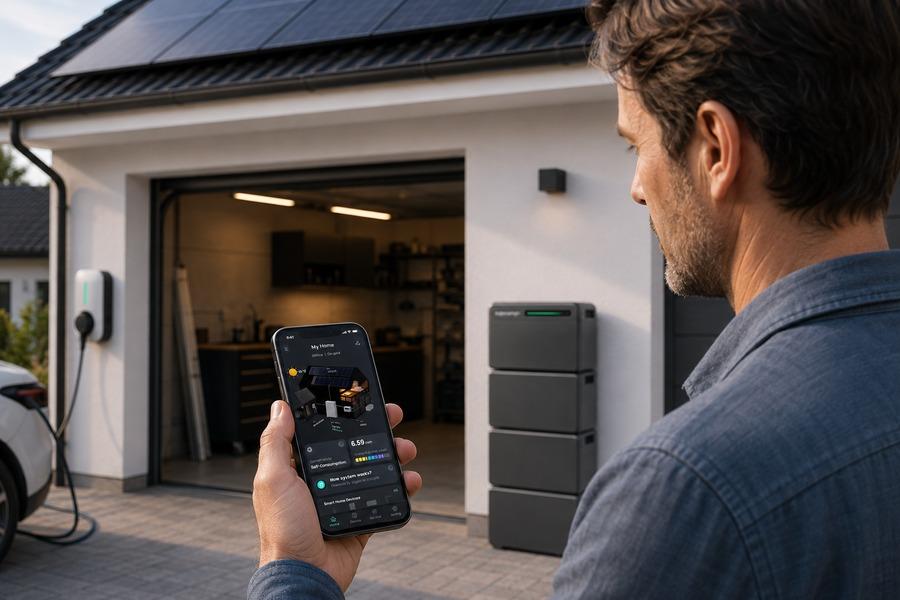
Backup reliability depends on the transfer path, load coverage, generator integration, and system control. We therefore specify the Energy Gateway as part of the complete backup design, with clear requirements for transfer time, whole-home or prioritized loads, generator start, and repeated outage operation.
For residential systems, Sigen Energy Gateway detects a grid outage and switches compatible loads to backup power automatically. Our HomePro SP model is specified at 12 kW nominal AC power with 0 ms backup-switch disruption when used with the compatible Sigen Energy Controller and Sigen Battery. The Gateway supports whole-home and prioritized backup, as well as diesel generator connection with 2-wire start. Remote generator control is available through the app where supported. Exact current, power, and backup coverage depend on the selected model and region.
For commercial sites, our C&I Energy Gateway uses a modular, side-by-side design for systems from kW-level to MW-level applications. The C1600, C2000, and C2400-B series support up to 2.4 MW of backup power. The Gateway works with the Sigen Hybrid Inverter and SigenStack in microgrid installations that require coordinated solar generation, storage, and backup power.
The mySigen App helps manage daily energy use after installation. Sigen AI Mode uses real-time weather forecasts, energy consumption patterns, battery status, and electricity prices to adjust charging and discharging strategies. In markets with time-of-use or dynamic tariffs, this control can improve annual savings by shifting energy use to more favorable periods.
The decision rarely comes down to coupling type alone, so we suggest comparing architectures against the outcomes the project is being judged on. AC coupled storage remains a sound answer for retrofit work with a healthy existing inverter. Where the priorities are overall efficiency, simpler equipment counts, dependable backup, EV charging and long term expansion, an integrated design deserves a serious look alongside it.
| Design question | What we suggest verifying | Our product or document to check |
|---|---|---|
| Conversion path | How many AC/DC stages sit between the panels and the load in the specific architecture quoted, and what each stage costs across a full year | SigenStor product page, SigenStack product page, Hybrid Inverter datasheet and solution documents in the Download Center |
| Backup behaviour | Transfer time, whole or partial coverage, generator compatibility, and behaviour under repeated outages | Sigen Energy Gateway page, residential Gateway manuals, C&I Energy Gateway documentation and regional installer manuals |
| Expansion headroom | Module increments, mixing of old and new packs, and parallel capability without replacing the inverter | SigenStor battery module documents, SigenStack datasheets and installation manuals |
| Safety and protection | Pack level protection layers, enclosure rating, and how thermal events are contained | SigenStor and SigenStack datasheets, safety documentation and warranty terms |
| Control and monitoring | Tariff awareness, forecast inputs, remote diagnostics, and the depth of data available to the O&M team | mySigen App page, Sigen AI Mode materials, Sigen Cloud and EMS documentation |
| Documentation | Datasheets, installer manuals and warranty terms matching the exact model and region being quoted | Our Download Center, filtered by product, solution and region |
Design decisions hold up better when they rest on current documentation, so we keep our technical material openly accessible. Before specifying an AC coupled battery storage project, our latest datasheets, user manuals, installer manuals, warranty documents and solution documents are available from the Download Center, filtered by product, solution and region. We recommend that teams comparing a retrofit AC-coupled design with an integrated architecture also review the SigenStor, SigenStack, Sigen Energy Gateway and mySigen App pages before contacting our team for project-specific support. Reviewing those files against the numbers in a quotation is the quickest way to confirm that a proposed system will behave the way the proposal claims, and our team is glad to work through the comparison with anyone weighing retrofit and integrated options.
Often, yes. AC coupled battery storage connects on the AC side, so many retrofit projects can keep the existing PV inverter in place. For one of our projects, the selected SigenStor, Gateway, sensor and inverter configuration should still be checked against the latest product documents and local installation rules.
Yes, if the backup path is designed correctly. The system needs a grid-forming backup device, such as Sigen Energy Gateway with SigenStor, to support loads when the utility grid is down. The installer also needs to confirm how the PV inverter behaves during backup operation and how excess solar power is controlled.
The system must manage the surplus energy. Depending on the design, extra solar power may be used by loads, exported to the grid, limited by export control, or curtailed. In our systems, this should be coordinated through the EMS, Gateway and mySigen App strategy rather than treated as a battery-only decision.
Usually, yes. Adding storage can change export behavior, backup operation and inverter settings, so many regions require permits or an interconnection update. Before installation, the exact approval process should be confirmed with the utility, installer and our relevant product documents.
It should be sized around the user's loads and operating goals. For backup, the key inputs are critical loads, outage duration and required backup power; for savings, the design should consider solar export, time-of-use tariffs, battery power limits and daily consumption patterns. We also design the system around future expansion through compatible battery modules and Gateway capacity.
Yes, if the energy management system can coordinate it. A conventional AC coupled setup may support solar-aware EV charging through controls, but our SigenStor also offers an integrated EV DC charging path for projects where PV, battery storage and EV charging need to work under one system. V2H and V2G capability should be described carefully because V2X depends on the EV, regional standards and official feature availability.




 Cookie Set

These cookies are essential for the proper functioning of my website. Without these cookies, the website would not work properly
| Name | Expiration | Description |
| PHPSESSID | session | Cookie generated by applications based on the PHP language. This is a general purpose identifier used to maintain user session variables. It is normally a random generated number, how it is used can be specific to the site, but a good example is maintaining a logged-in status for a user between pages. |
| cookielist-consent | 1 year | Sets this cookie to remember users' consent preferences so that their preferences are respected on their subsequent visits to this site. It does not collect or store any personal information of the site visitors. |
| sl-session | 1 day | Anti-crawler and machine behavior recognition |
Analytical cookies are used to understand how visitors interact with the website. These cookies help provide information on metrics such as the number of visitors, bounce rate, traffic source, etc.
| Name | Expiration | Description |
| _ga | 1 year | The _ga cookie, installed by Google Analytics, calculates visitor, session and campaign data and also keeps track of site usage for the site's analytics report. The cookie stores information anonymously and assigns a randomly generated number to recognize unique visitors. |
| _ga_6JGTHLPYFN | 1 year | This cookie is installed by Google Analytics. |
| _gcl_au | 3 months | Provided by Google Tag Manager to experiment advertisement efficiency of websites using their services. |