


Necessary



 Login
 Global (English)
05 Nov, 2026
Share
Should you keep your existing solar inverter when adding a battery, or choose a new system that manages both solar and storage? At Sigenergy, we develop home energy solutions that combine solar, battery storage, and EV charging. We start with the equipment you already have and what you need the battery to do.
AC coupling often makes sense when you want to add storage while keeping your existing solar equipment. DC coupling is often a better fit when installing solar and storage together, as it reduces the conversion steps needed to store solar power. We also consider installation costs, backup needs, and future expansion when assessing the options.
Both architectures can combine solar storage with household power, but their energy paths, usable energy, and system capabilities differ.
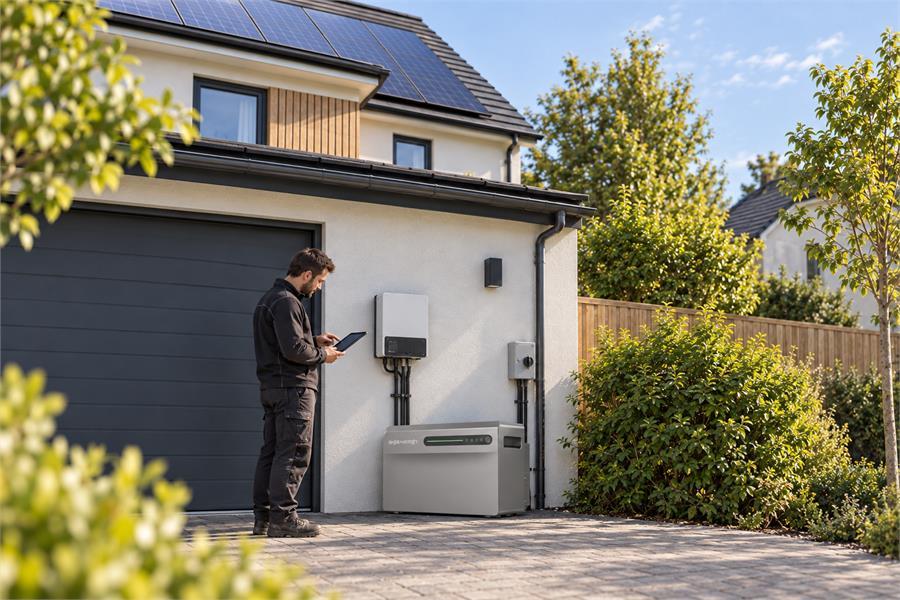
An AC-coupled battery is added to the AC side of an existing solar system. It uses a separate battery inverter alongside the solar inverter.
During the day, the solar panels produce electricity, and the solar inverter converts it into AC power for the home. When the panels produce more power than the home needs, the battery inverter converts the extra AC power into DC power and stores it in the battery. Later, the battery inverter converts the stored power back into AC for the home.
The stored electricity is converted three times before it reaches the home. This can lead to slightly higher energy losses than a DC-coupled system. The main benefit of AC coupling is that it can usually be added to an existing solar system without replacing the solar panels or solar inverter.
A DC-coupled battery connects to the solar panels through the DC side of a hybrid inverter. Solar panels produce DC electricity, and batteries also store DC electricity. This allows solar power to charge the battery without being converted first. When the home or grid needs the stored energy, the hybrid inverter converts it into AC power.
The inverter's charge controller manages the voltage and current during charging. A hybrid solar inverter built for battery integration brings the solar panels, battery, and power conversion together in one system.
| Factor | AC Coupled | DC Coupled |
|---|---|---|
| Major conversion path for stored solar | DC -> AC -> DC -> AC | DC-side charging, then DC -> AC on discharge |
| Round-trip efficiency | Hardware- and design-dependent; typically lower | Hardware- and design-dependent; typically higher |
| Best fit | Retrofit to existing solar | New solar-plus-storage build |
| Inverters involved | Two (existing plus battery) | One shared hybrid inverter |
| Charging from the grid | Straightforward, subject to equipment and local grid rules | Depends on the specific hybrid inverter model, energy management settings, and local grid rules |
| Capturing solar above the inverter's AC rating | Limited | Possible on the DC side, depending on system design |
DC coupling usually has higher efficiency because solar power can reach the battery without being converted from DC to AC first. When the home needs the stored energy, the hybrid inverter converts it to AC. AC coupling uses more conversion steps because the power changes from DC to AC, then back to DC for storage, and to AC again when the home uses it.
Fewer conversions can reduce energy loss, but the exact result depends on the inverter and battery models, operating power, temperature, system settings, and how efficiency is measured. This comparison of AC and DC coupled battery systems shows the general difference, not a fixed result for every system.
DC-coupled systems still include internal DC-to-DC conversion, so they are not loss-free. Their efficiency advantage comes from reducing the number of DC-to-AC and AC-to-DC conversions in the stored-energy path.
AC coupling often suits homes with an existing solar system. The solar panels and solar inverter can stay in place, while the installer adds a separate battery inverter on the AC side. This can reduce changes to the existing PV wiring and avoid replacing equipment that is still working or under warranty.
DC coupling is usually planned for a new solar-plus-storage system. The solar panels and battery connect through a shared hybrid inverter, so the inverter, battery, and PV array must match in voltage, power, and communication requirements. The installer also needs to check the backup circuits, wiring, available space, and local electrical rules.
At Sigenergy, our SigenStor 5-in-one energy storage system combines the solar inverter, battery, power conversion, and energy management functions in one modular system, with support for EV DC charging. This design reduces the number of separate components that need to be matched and connected. For an existing solar system, the installer must first confirm compatibility with the current inverter, wiring, and backup setup.
Both AC-coupled and DC-coupled systems can support battery expansion, but the available capacity depends on the inverter, battery modules, and overall system design. The SigenStor uses a modular battery design that can be stacked and expanded over time. Homeowners can start with the capacity they need and add more battery modules later. Before expanding the system, the installer should check the inverter, Gateway, and compatibility of the additional modules.
If EV charging is part of the plan, the charging method also affects the system design. With the SigenStor EV DC charging module, solar and battery power can reach a compatible EV through the DC side of the system. Bidirectional charging, including V2H and V2G, requires support from the vehicle, local market, and complete system configuration.
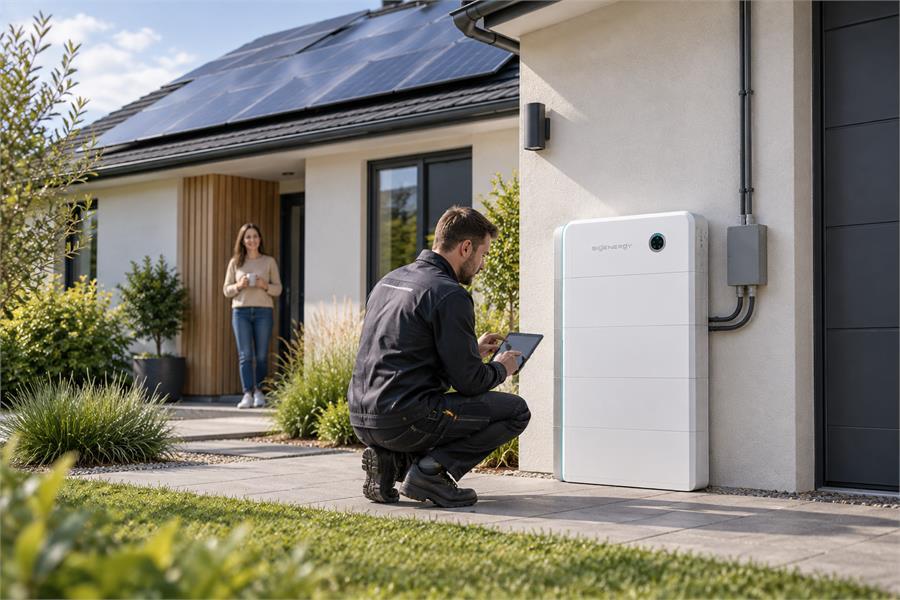
The choice is usually determined by the existing equipment, the project type, backup wiring, EV plans, and future expansion requirements. The following guide provides a practical starting point:
| Situation | Usually leans toward | What to check |
|---|---|---|
| Adding a battery to an existing string-inverter solar system | AC coupling | Existing inverter age and warranty, AC battery inverter compatibility, backup circuit design, and Gateway requirements |
| New solar-plus-storage installation | DC coupling | Sigen Hybrid Inverter sizing, PV string voltage, MPPT range, battery capacity, and backup loads |
| Solar system using microinverters | AC coupling | AC-side battery integration, export limits, backup architecture, and compatibility with the existing system |
| High-value backup circuits or whole-home backup | Either, depending on design | Backup load profile, inverter output, battery charge and discharge power, transfer equipment, and local electrical rules |
| Planned EV charging and future capacity expansion | Often DC coupling | SigenStor EV DC and vehicle support, regional availability, bidirectional charging support, and SigenStor module expansion |
AC coupling is usually a good fit for a home that already has solar and wants to add a battery. The existing solar panels and inverter can stay in place, so installation is often simpler. This may be worth the small efficiency trade-off, especially when selling extra daytime solar to the grid brings limited financial benefit.
DC coupling is usually better for a new solar system or a complete system replacement. The solar panels and battery can be designed to work with one hybrid inverter, which can reduce conversion losses and keep the system more compact. It may also store solar power that would otherwise be limited by the inverter's AC output. The actual result depends on the battery's available capacity, charging power, inverter limits, and overall system design. DC coupling can also suit homes planning EV charging or future battery expansion.
To illustrate this more specifically, let's take two of the most common scenarios as examples.
The first is a home with a 6 kW rooftop array and a three-year-old string inverter that still works well, wanting backup for outages plus some evening bill savings. For this home, AC coupling is usually the sensible call. The existing inverter keeps running, the battery is added on the AC side with minimal disruption, and the efficiency the household gives up is small next to the cost and hassle of replacing gear that is doing its job.
The second is a new build with no solar yet, planning around a 10 kWh battery and an EV charger from day one. Here DC coupling generally makes more sense. A single hybrid inverter can coordinate the panels and battery with the EV charging system, helping the household use more of its solar over the year through an integrated system interface.
When weighing the two, these questions usually settle the matter faster than the AC-versus-DC debate itself:
If you would like a setup checked against your own numbers, you can find a Sigenergy installer to design and size a system for your home, and the spec sheets and installation manuals in our product download center lay out the supported configurations in detail.
Neither one is universally better, and any guide that declares a flat winner is skipping the part that matters. DC coupling generally leads on efficiency and suits new solar-plus-storage builds thanks to fewer conversions and a cleaner single-inverter layout. AC coupling generally leads on flexibility and suits retrofits, letting a battery join an existing solar home with minimal fuss. The better choice is the one that matches your roof, your goals, and your timeline.
Every home has different solar equipment, energy needs, and local requirements. At Sigenergy, we help homeowners and installers turn these details into a practical storage plan, whether they are adding a battery to an existing system or planning a new solar-plus-storage project.
Contact Sigenergy to discuss your project with our team and find a solution designed around your home.
No. A battery needs proper charge control, battery management, and inverter compatibility. In a DC coupled system, the battery connects through a hybrid inverter or charge controller that manages voltage, current, and charging behavior safely.
AC coupling is usually the practical choice. Microinverters convert panel output to AC at the roof, so there is no shared DC string for a DC coupled battery to connect to. Adding storage on the AC side avoids redesigning the solar array.
Yes, if the hybrid inverter supports it. Grid charging depends on the inverter, energy management settings, local regulations, and tariff rules. Homeowners who want time-of-use charging or VPP participation should confirm this function before choosing a system.
It can. A DC coupled system often relies on one hybrid inverter to manage solar, battery, and backup power, so inverter failure can affect more of the system. The trade-off is simpler coordination, fewer separate devices, and cleaner energy management when the system is designed well.
They should check electrical compatibility first. Key details include PV string voltage, cold-weather Voc, MPPT range, battery charge power, backup load requirements, export limits, and supported battery modules. Many performance problems come from treating DC coupling as a simple wiring choice instead of a full system design decision.
Yes. Solar power used directly by home appliances does not need to pass through the battery first. The main efficiency penalty appears when solar energy is stored in the battery and discharged later, because that stored path involves extra conversion steps.





 Cookie Set

These cookies are essential for the proper functioning of my website. Without these cookies, the website would not work properly
| Name | Expiration | Description |
| PHPSESSID | session | Cookie generated by applications based on the PHP language. This is a general purpose identifier used to maintain user session variables. It is normally a random generated number, how it is used can be specific to the site, but a good example is maintaining a logged-in status for a user between pages. |
| cookielist-consent | 1 year | Sets this cookie to remember users' consent preferences so that their preferences are respected on their subsequent visits to this site. It does not collect or store any personal information of the site visitors. |
| sl-session | 1 day | Anti-crawler and machine behavior recognition |
Analytical cookies are used to understand how visitors interact with the website. These cookies help provide information on metrics such as the number of visitors, bounce rate, traffic source, etc.
| Name | Expiration | Description |
| _ga | 1 year | The _ga cookie, installed by Google Analytics, calculates visitor, session and campaign data and also keeps track of site usage for the site's analytics report. The cookie stores information anonymously and assigns a randomly generated number to recognize unique visitors. |
| _ga_6JGTHLPYFN | 1 year | This cookie is installed by Google Analytics. |
| _gcl_au | 3 months | Provided by Google Tag Manager to experiment advertisement efficiency of websites using their services. |