


Necessary



 Login
 Global (English)
05 Nov, 2026
Share
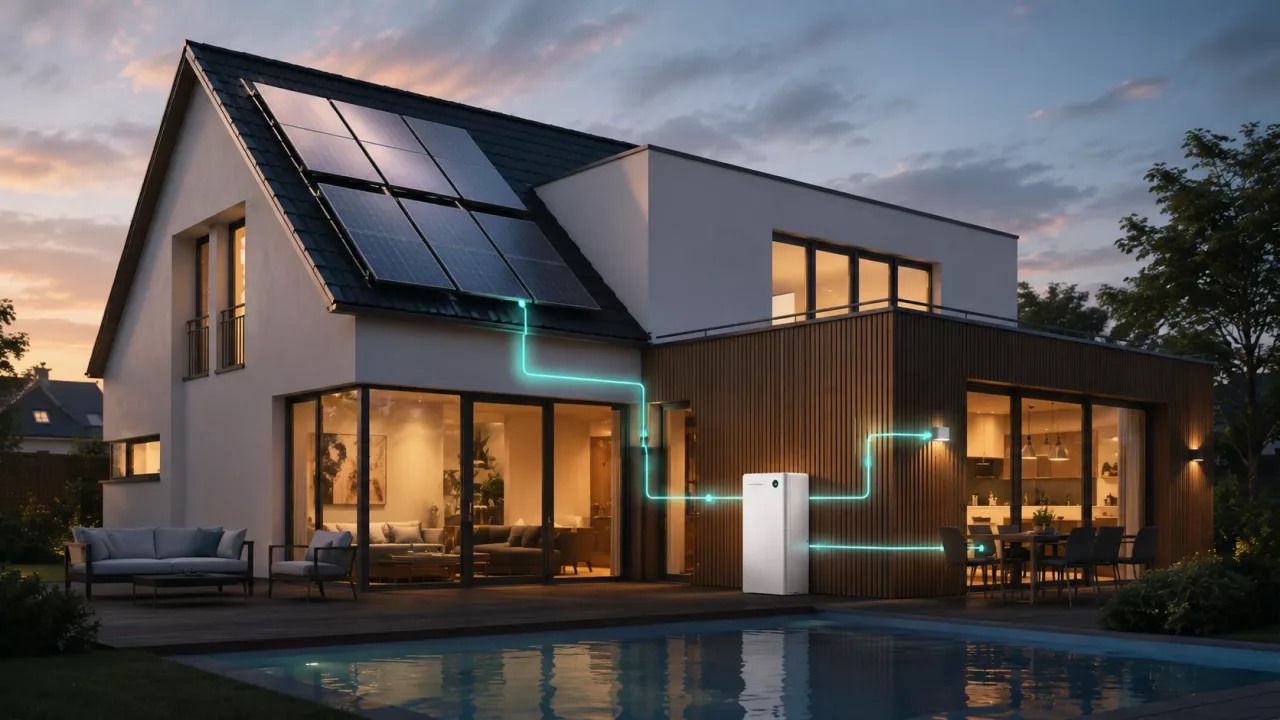
For a home solar battery, charge cycles are a useful way to understand how much work the battery has done over time. Every time your battery stores solar power during the day and supplies that power in the evening or overnight, it adds to the system's overall usage history.
But a cycle does not always mean one full charge and one full discharge in a single session. Most households use their battery in smaller daily portions. That is why cycle count, usable capacity, depth of discharge, energy throughput, and warranty terms all need to be understood together.
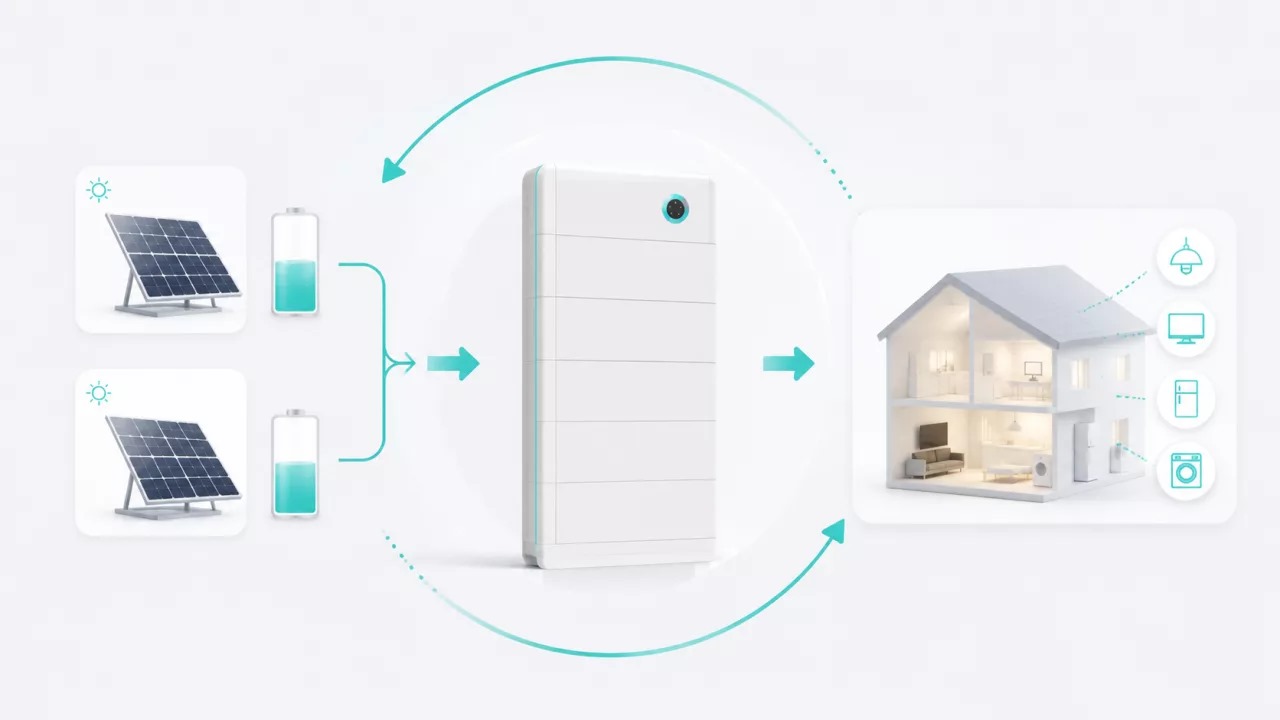
A battery charge cycle measures how much of a battery's usable capacity has been delivered over time. In home energy storage, one equivalent full cycle is reached when the battery supplies energy equal to 100% of its rated usable capacity, whether that happens in one discharge or across several smaller discharges.
The easiest way to estimate battery cycles is to compare the energy used with the battery's usable capacity:
Equivalent full cycles = energy discharged / usable battery capacity
For example, if a 10 kWh home battery delivers 5 kWh in one evening, that is about half a cycle. If it delivers another 5 kWh the next day, those two partial uses add up to one equivalent full cycle.
This is where usable capacity matters. Some battery systems reserve part of their total capacity to protect the cells, while systems designed around 100% depth of discharge, such as SigenStor, are engineered to make the full rated usable capacity available under normal BMS-controlled operation.
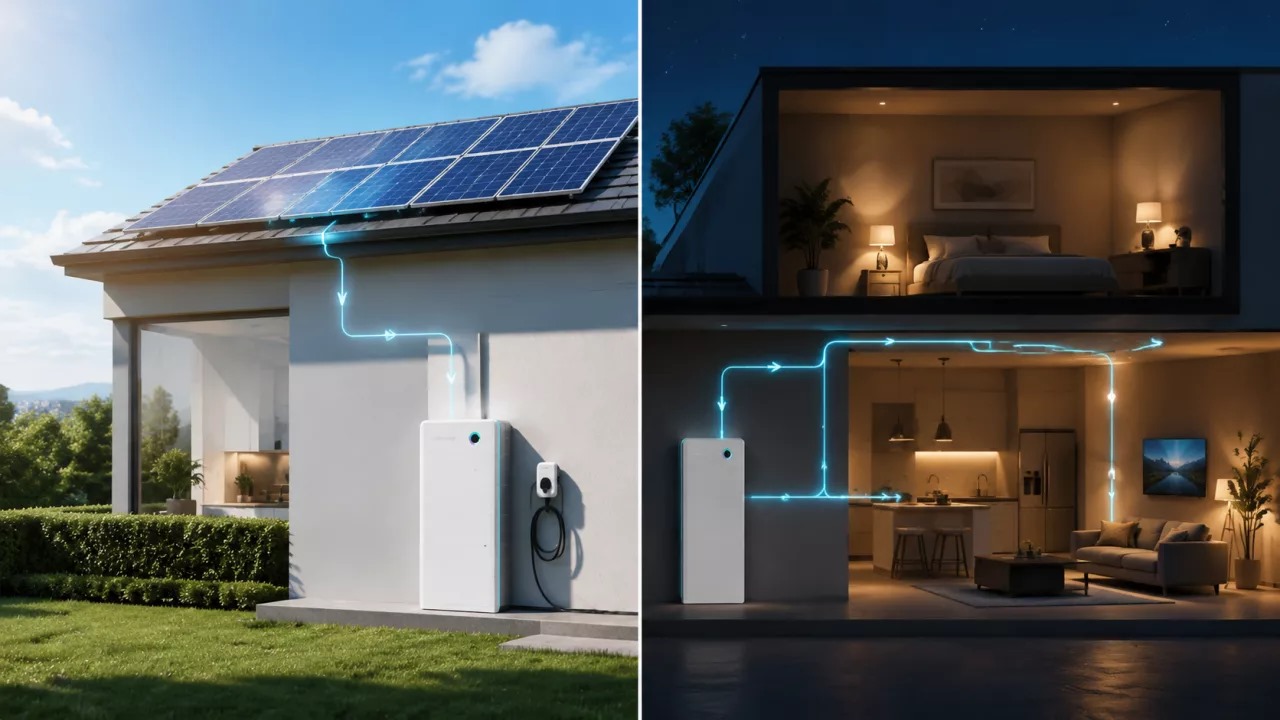
In a home solar battery system, a charge cycle is shaped by how your household produces and uses energy. A common pattern is simple: rooftop solar charges the battery during the day, and the battery supplies stored energy in the evening when solar production falls and household demand rises.
A partial cycle happens when the battery is charged and discharged by less than its full usable capacity. Several partial cycles can add up to one equivalent full cycle over time.
A full cycle means the battery has delivered energy equal to its full usable capacity.
Double cycling happens when a household charges and discharges the battery more than once within 24 hours. For example, the battery may charge from solar during the day, discharge in the evening, charge again with cheaper off-peak grid power, and discharge during a higher-price period.
Double cycling can improve savings when there is a clear gap between off-peak and peak electricity prices. It also means the battery moves more energy each year, so it builds up equivalent full cycles faster and uses more of its warranty throughput allowance. Whether it makes sense depends on your tariff, battery settings, backup needs, and warranty conditions.
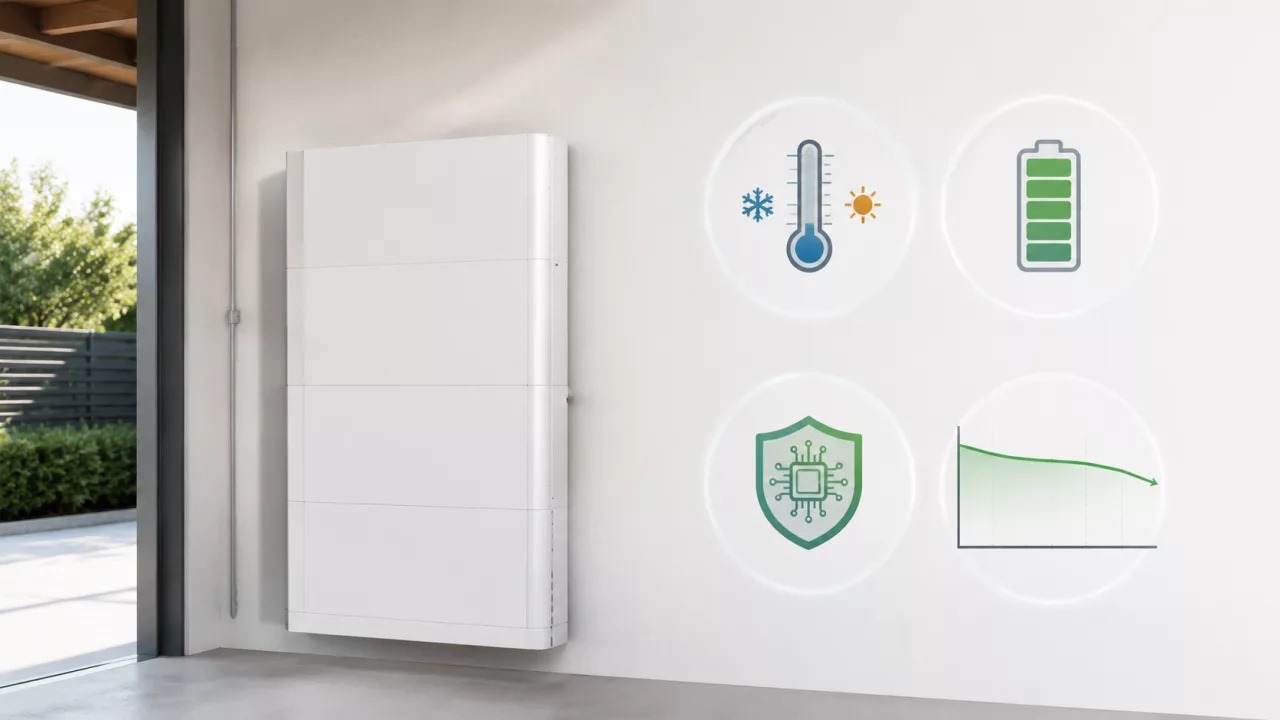
Cycle count is only one part of battery ageing. How the battery is used, where it is installed, and how well it is managed can make a major difference to long-term performance.
Battery chemistry plays an important role. Many modern home solar batteries use lithium iron phosphate, or LiFePO4/LFP, chemistry because it is valued for thermal stability, safety, and strong cycle life. In Australia, eligible products may also be listed on the Clean Energy Council's approved batteries list , which can be relevant for rebates, grid connection, and installer requirements.
Temperature and installation conditions can affect how quickly a battery ages. Long periods of high heat can speed up degradation, while cold conditions may temporarily reduce available capacity. A shaded, well-ventilated installation location helps support more stable long-term performance.
The battery management system, or BMS, helps protect the battery by controlling charge and discharge behaviour, balancing cells, keeping voltage within safe limits, and preventing unsafe operating conditions.
Depth of discharge should be understood in relation to the product's design. Generic battery-care advice often suggests reducing deep discharge for systems that are not designed for full-depth use. However, this does not apply in the same way to batteries engineered around high usable capacity and system-controlled protection.
SigenStor supports 100% depth of discharge, meaning the full rated usable energy capacity can be used under normal system-controlled operation. The practical recommendation is not to avoid using the battery's rated capacity, but to let the system operate within its designed settings and avoid unnecessary extra cycling when it does not create meaningful savings, backup value, or self-consumption benefit.
Throughput is the total amount of energy a battery is warranted to deliver over its life, usually written in MWh or kWh. Every kWh discharged from the battery contributes to that total.
This is why a headline cycle-life number should not be read in isolation. A useful comparison should include usable capacity, depth of discharge, warranted throughput, battery chemistry, system controls, and operating conditions.
For homeowners, the important question is not simply "How many cycles does this battery have?" A better question is: "How much usable energy can the battery deliver over its warranted life, and how intelligently does the system manage that use?"
This is where SigenStor connects directly with the topic of battery cycles. SigenStor brings solar storage, energy management, battery protection, backup capability, and optional EV DC charging support into one integrated system. Its battery design supports 100% depth of discharge, while its intelligent controls help manage daily charging and discharging within the system's intended operating range.
Sigen Battery modules use LFP chemistry, and selected models are rated for up to 10,000 cycles under laboratory conditions. In real homes, long-term performance depends on system design, installation conditions, temperature, settings, usage patterns, and warranty terms.
For SigenStor in Australia and New Zealand, the Sigen Battery is covered by a 10-year limited performance warranty based on retained usable energy or minimum throughput energy, whichever comes first. Homeowners should always review the latest local SigenStor warranty documents for the exact terms that apply to their installation.
| SigenStor module | Usable energy listed in AU/NZ warranty | Minimum throughput energy |
|---|---|---|
| SigenStor BAT 5.0 | 5.2 kWh | 15.84 MWh |
| SigenStor BAT 6.0 | 5.84 kWh | 17.79 MWh |
| SigenStor BAT 8.0 | 7.8 kWh | 23.77 MWh |
| SigenStor BAT 10.0 | 8.76 kWh | 26.68 MWh |
For example, if a home draws around 8 kWh from the battery per day, that equals roughly 2,920 kWh per year before efficiency losses. Looking at throughput in this way helps homeowners understand how everyday battery use relates to long-term value.
A modern home battery is designed to manage most charging and protection functions automatically. Still, a few everyday practices can help support reliable long-term performance:
When comparing home batteries, look beyond the headline cycle-life number. Usable capacity, supported depth of discharge, warranted throughput, operating temperature range, battery management, and installation conditions all play an important role in real-world performance.
For homeowners looking for an integrated approach, SigenStor combines solar storage, energy management, backup capability, and optional EV DC charging support in one modular system. To choose the right battery capacity and cycling strategy for your home, use the SigenStor Calculator, review the latest SigenStor specifications, and speak with an appropriately qualified solar battery installer.
Check the battery app or monitoring portal. Daily discharge energy, state of charge patterns, and annual throughput give a clearer picture of how heavily the battery is being used compared with normal household self-consumption. For Sigenergy systems, the mySigen App helps homeowners view energy flow and system information in one place.
Not necessarily. Generic advice to avoid deep discharge mainly applies to batteries that are not designed or warranted for full-depth use. SigenStor supports 100% depth of discharge, meaning the full rated usable capacity can be used under normal system-controlled operation. The more important point is to avoid unnecessary extra cycling where there is no tariff, backup, or self-consumption benefit.
Yes. Lithium batteries are affected by calendar ageing, temperature, and storage state of charge, so a battery can gradually lose capacity even with light cycling. This is why both usage conditions and installation environment matter.
It can, depending on the warranty terms and system settings. VPP participation may increase how often the battery charges and discharges, so homeowners should check throughput limits, operating conditions, and approved control settings before joining.
Sometimes, but size should match your home's energy use. A larger battery may reduce daily depth of discharge, but oversizing can leave capacity unused and make the system less cost-effective. A modular system such as SigenStor can help homeowners choose a capacity that better matches current and future needs.
It depends on your goal. Daily use can improve solar self-consumption and tariff savings, while a higher backup reserve gives more protection during outages. The best setting depends on your tariff, outage risk, household load, and energy-management priorities.




 Cookie Set

These cookies are essential for the proper functioning of my website. Without these cookies, the website would not work properly
| Name | Expiration | Description |
| PHPSESSID | session | Cookie generated by applications based on the PHP language. This is a general purpose identifier used to maintain user session variables. It is normally a random generated number, how it is used can be specific to the site, but a good example is maintaining a logged-in status for a user between pages. |
| cookielist-consent | 1 year | Sets this cookie to remember users' consent preferences so that their preferences are respected on their subsequent visits to this site. It does not collect or store any personal information of the site visitors. |
| sl-session | 1 day | Anti-crawler and machine behavior recognition |
Analytical cookies are used to understand how visitors interact with the website. These cookies help provide information on metrics such as the number of visitors, bounce rate, traffic source, etc.
| Name | Expiration | Description |
| _ga | 1 year | The _ga cookie, installed by Google Analytics, calculates visitor, session and campaign data and also keeps track of site usage for the site's analytics report. The cookie stores information anonymously and assigns a randomly generated number to recognize unique visitors. |
| _ga_6JGTHLPYFN | 1 year | This cookie is installed by Google Analytics. |
| _gcl_au | 3 months | Provided by Google Tag Manager to experiment advertisement efficiency of websites using their services. |