


Necessary



 Login
 Global (English)
05 Nov, 2026
Share
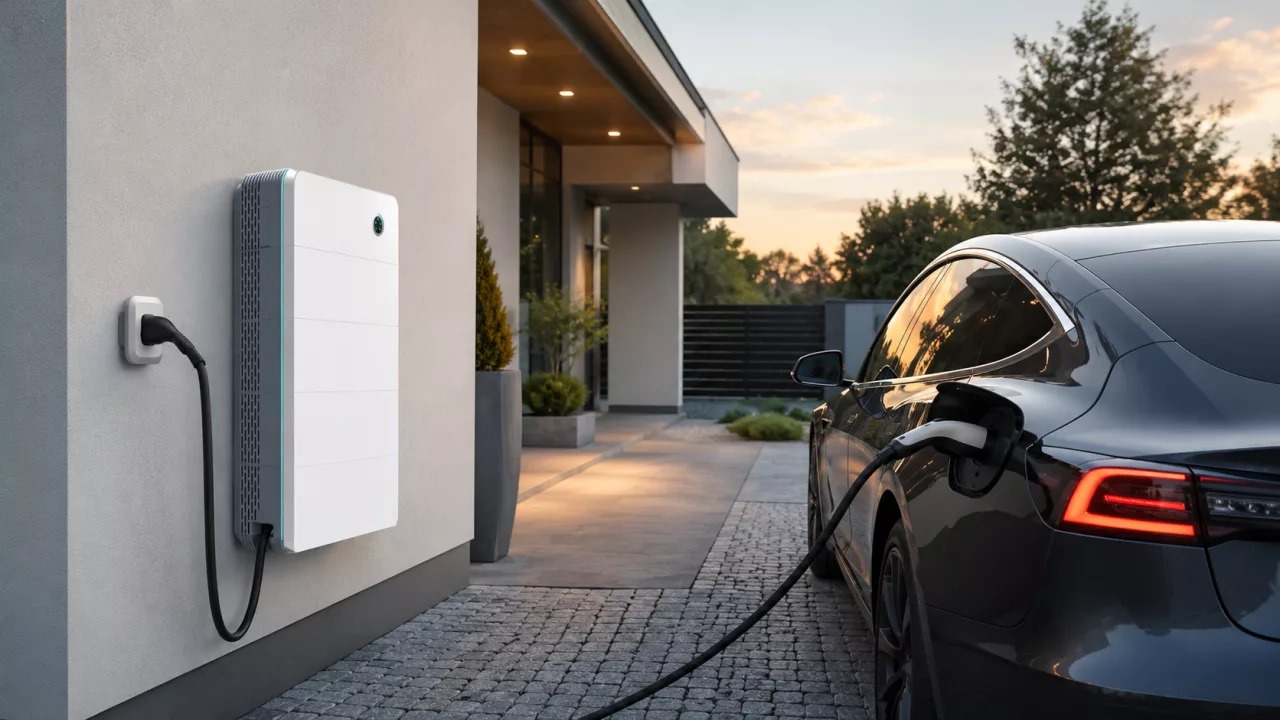
Fast EV charging at home is becoming worth it for homes that already have or plan to add solar and a home battery. The reason is simple: normal home charging can be slow. A home DC charger shortens that wait by giving your EV a faster top-up, while also helping you use more of the solar power your home has already generated. With the right battery setup, it can also support backup power when the grid goes down.
For the right home, the value of a DC charger is not only that it charges faster. The bigger point is how it works with solar power, a home battery, and backup energy.
A home DC charger helps in three practical ways. First, it can add a useful amount of range much faster than a standard AC charger. Second, it can help you use more of your own daytime solar power instead of sending it away or leaving it underused. Third, when it is part of a battery-based home energy system, it can also support backup power during an outage.
Choosing the right home DC charger comes down to a few questions we run through on every job: how much power your home can actually supply, where that power comes from, and whether the unit fits your car. Get those right and the charger earns its keep. Chase the biggest number on a spec sheet and you pay for capacity a house can never feed.
From experience, 25 kW is the sweet spot for a home — enough to put back real range in an hour, and about as much as a solar-and-battery house can comfortably deliver. Beyond raw power, look for a charger that pulls from your solar, your battery, and the grid together, so you drive on your own sunshine and call on the grid only when you have to. Then check that the output voltage range covers your EV and the connector matches; standards vary by market, so the industry body CharIN is a useful reference for how CCS2, CCS1, and NACS are evolving.
That thinking shaped our Sigen EV DC Charging Module. It's a single 25 kW unit built for the home, adding up to 150 km of range in an hour and blending solar, battery, and grid through a shared DC bus, so the energy skips the conversion losses of a conventional AC setup and flows straight into your car. A 150–1000 V output covers both 400 V and 800 V EVs, with a choice of CCS2, CCS1, or NACS connector. It also runs in three modes: Fast Charging for the quickest top-up from all three sources, PV Surplus Charging to send only your leftover solar to the car, and Battery Boost Charging to lift speed from your home battery with a cut-off state of charge you set.
A home DC fast charger is a premium purchase, and the price reflects that. The unit itself carries higher-grade power electronics and safety systems, and the install needs a licensed electrician who can commission it alongside your solar and battery as one system. On top of the hardware, budget for wiring, any switchboard work, and any approval your local network may require. Prices vary by market and connector, so we recommend a written quote covering all of it before you commit. For exact ratings and dimensions to share with your installer, you can pull the specs from our download centre.
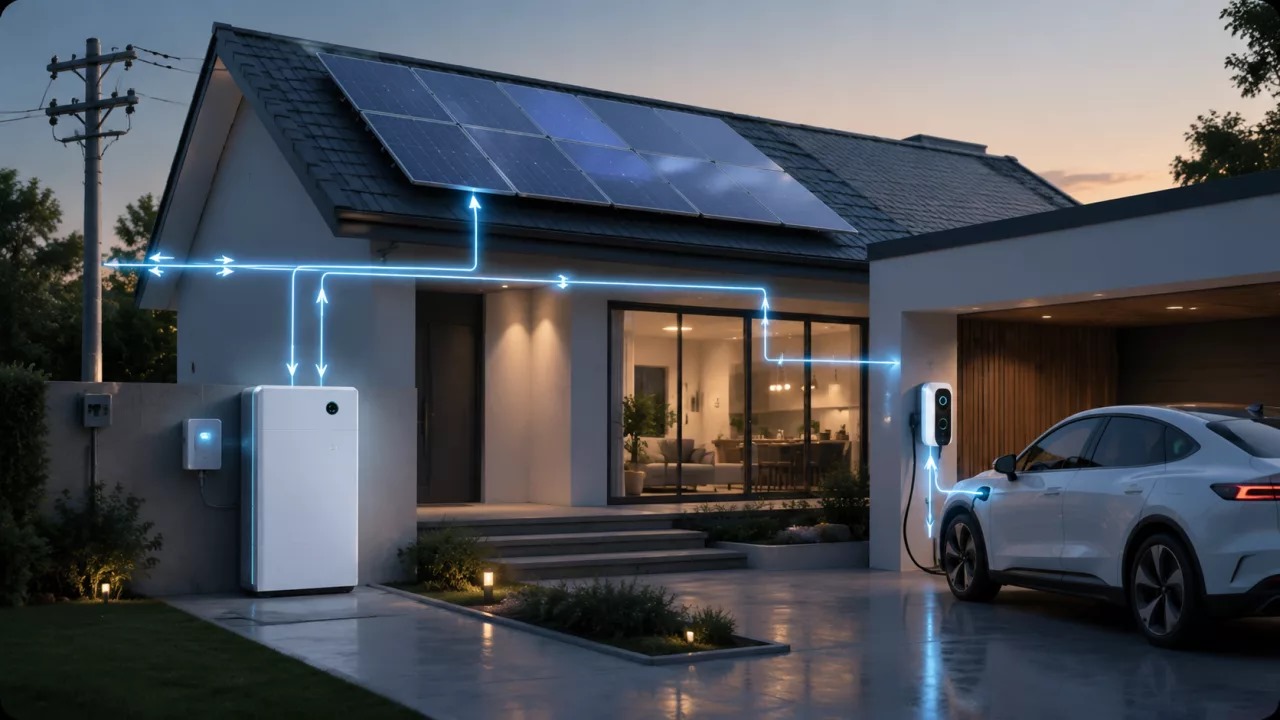
The feature many buyers value most is two-way power. Vehicle-to-home (V2H) turns your EV into a backup battery, and paired with a Sigen battery it can call on more than 100 kWh of storage to keep essential loads running through an outage. Vehicle-to-grid (V2G) lets the car send energy back at peak times, so it can shave demand and earn its keep.
Two-way charging depends on your EV supporting it, and the feature set expands over the air as more vehicles and standards arrive. In Australia, bidirectional charging now sits under AS/NZS 4777.2, so check your car and your local rules before you count on it.
For a solar-and-battery home, fast EV charging is worth it, and the Sigen EV DC Charging Module is worth buying: 25 kW charging fed by your own sunshine, three modes to match how you drive, two-way power for backup and grid income, and a modular install that keeps upkeep low.
Confirm your solar and battery setup, your EV's compatibility, and whether V2H or V2G is supported where you live, then talk to a licensed installer.
Yes, but not every home is ready for one. A residential DC charger needs the right electrical setup, compatible equipment, and a licensed installer to check the site before installation.
Not if it is used sensibly. Fast charging creates more heat than slower AC charging, so it is better used for quick top-ups when needed rather than charging to 100% at full speed every day.
It depends on your home. The installer needs to check your existing supply, solar inverter, home battery, and local grid rules before confirming whether an upgrade is needed.
Yes, if the system is designed for it. In real use, solar output changes through the day, so the charger may also use battery power or grid power to keep charging stable.
It is better for planned charging at home. Public fast chargers are still useful on long trips, but a home DC charger gives you faster top-ups where the car already parks.





 Cookie Set

These cookies are essential for the proper functioning of my website. Without these cookies, the website would not work properly
| Name | Expiration | Description |
| PHPSESSID | session | Cookie generated by applications based on the PHP language. This is a general purpose identifier used to maintain user session variables. It is normally a random generated number, how it is used can be specific to the site, but a good example is maintaining a logged-in status for a user between pages. |
| cookielist-consent | 1 year | Sets this cookie to remember users' consent preferences so that their preferences are respected on their subsequent visits to this site. It does not collect or store any personal information of the site visitors. |
| sl-session | 1 day | Anti-crawler and machine behavior recognition |
Analytical cookies are used to understand how visitors interact with the website. These cookies help provide information on metrics such as the number of visitors, bounce rate, traffic source, etc.
| Name | Expiration | Description |
| _ga | 1 year | The _ga cookie, installed by Google Analytics, calculates visitor, session and campaign data and also keeps track of site usage for the site's analytics report. The cookie stores information anonymously and assigns a randomly generated number to recognize unique visitors. |
| _ga_6JGTHLPYFN | 1 year | This cookie is installed by Google Analytics. |
| _gcl_au | 3 months | Provided by Google Tag Manager to experiment advertisement efficiency of websites using their services. |