


Necessary



 Login
 Global (English)
05 Nov, 2026
Share
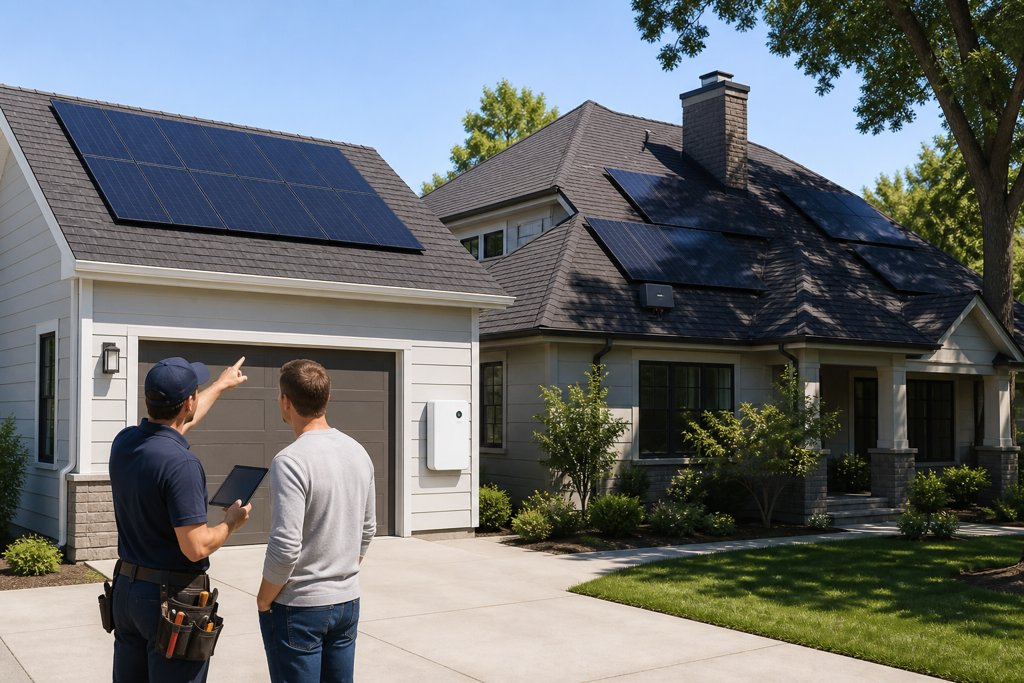
Pick a string (hybrid) inverter when your roof faces mostly one way and gets steady sun, and pick a micro inverter when your roof is shaded, split across several angles, or very small. It comes down to where the electricity gets converted. A string inverter takes the combined power from a whole group of panels and converts it in one box on the wall, while a micro inverter converts the power at each panel. That one difference shapes how your system handles shade, how easily you keep an eye on it, and how simply you add to it later. We build both, so let's walk through which one fits your roof, in plain terms.
Go with our Sigen Hybrid Inverter when your roof faces mainly one direction, gets fairly even sun through the day, and you might want to add a battery down the road. The second-generation unit is a slim die-cast metal box, just 99 mm deep, with no fan inside or out. It runs at about 25 dB, which is roughly the sound of a quiet room, so it sits comfortably in a hallway or garage without you noticing it. On our three-phase units, silicon carbide electronics push efficiency up to 99.0%, meaning very little of your solar energy is lost turning it into usable power.
The battery-ready part is where this really pays off if you want to spread out the cost. You can put in solar now and add a Sigen Battery whenever you like. Because the wiring and the control side are already set up for storage, the second stage skips most of the rework you would face with a solar-only inverter. That keeps your upfront spend lower and makes the upgrade far simpler when you are ready. If you also want backup power during an outage, you would pair the battery with a compatible gateway, and it is worth flagging that on day one so the design allows for it.
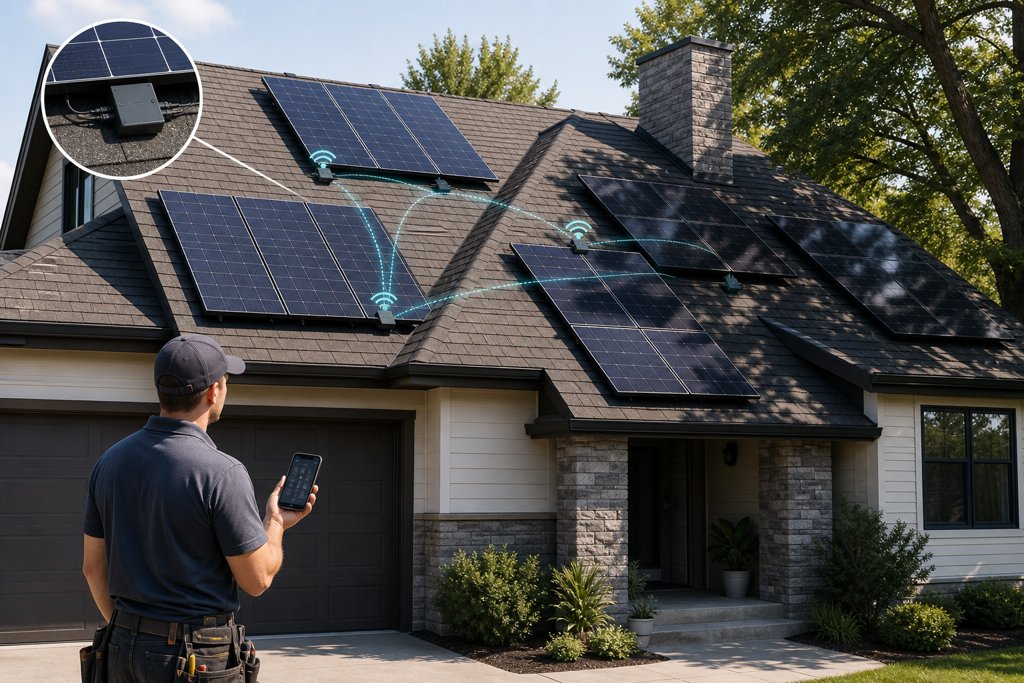
Reach for our SigenMicro Inverter when shade, multiple roof angles, or a small setup is in play. Because each panel converts its own power, one weak or shaded panel barely drags down the ones next to it. That makes SigenMicro a strong fit for tricky rooftops, balcony solar, and small systems under about 2 kW.
Independent testing backs up why panel-level conversion matters in shade. In a 2012 test run for the U.S. Department of Energy's National Renewable Energy Laboratory, a micro inverter and a string inverter each ran an identical 8 kW array. The micro inverter produced about 3.7% more under light shade, 7.8% more under moderate shade, and 12.3% more under heavy shade. If you want the plain-English background on how inverters do their job, the DOE's inverter basics guide is a good starting point.
A few design choices set SigenMicro apart from a basic micro inverter, and each one solves a real headache on site. It uses WLAN Mesh communication, so the units talk to each other without a separate gateway, which keeps installs like balcony solar clean and quick. An energy management system is built into each unit, giving every panel independent control. And DAB power topology helps it reach up to 97.5% efficiency. On awkward roofs, AI layout recognition maps your panels from the rooftop drawings, so many systems come online in around five minutes. To size a specific array, our SigenMicro calculator asks for your panel power, quantity, grid voltage, and orientation, then returns a suggested setup.
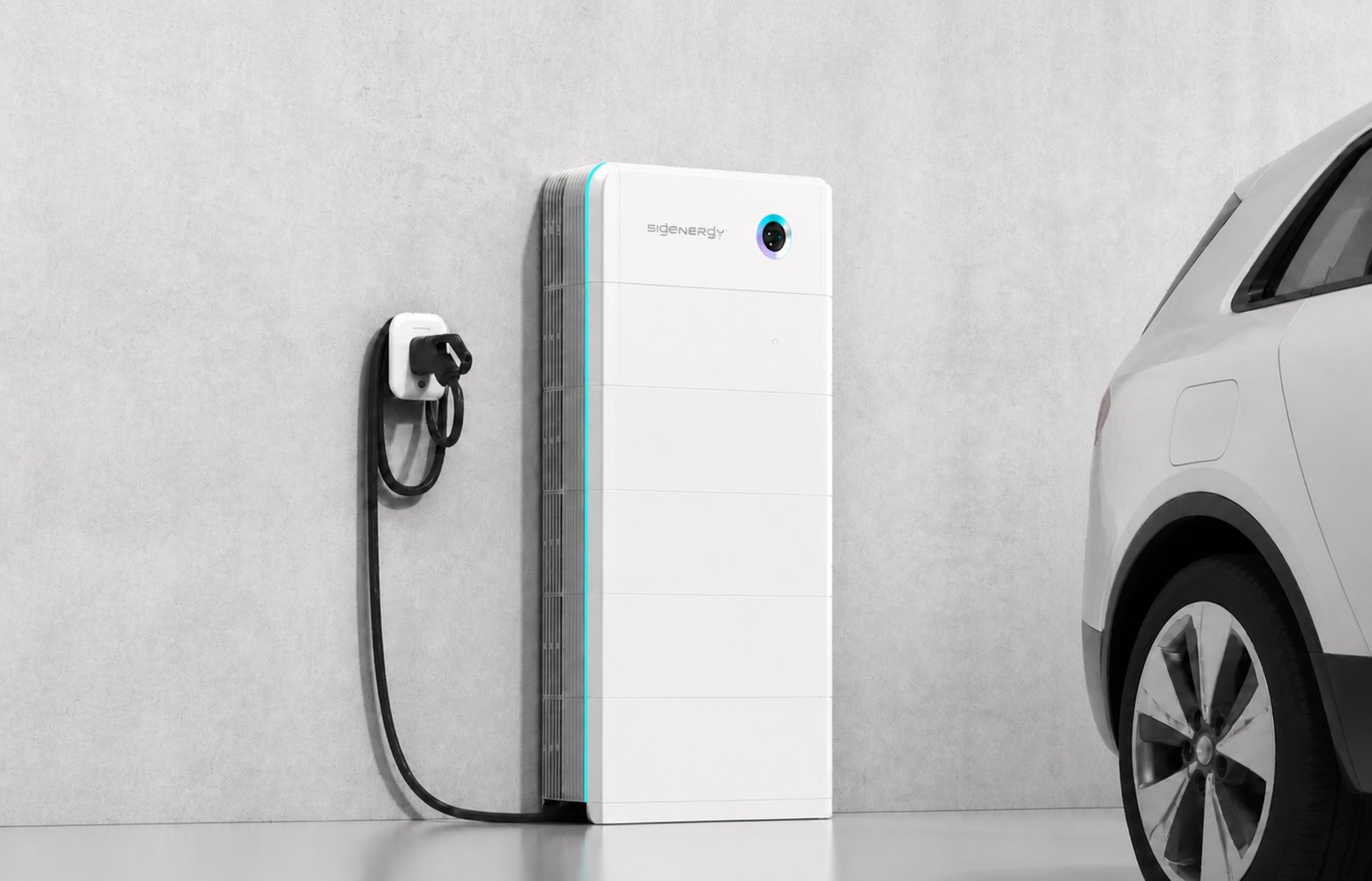
If your project covers solar, storage, backup, and EV charging all at once, our SigenStor usually makes more sense than a standalone inverter. It is a 5-in-one energy system that brings a solar inverter, an EV DC charger, the battery power electronics, the battery pack, and the energy management system together in one stackable tower. The parts arrive already matched, so there is far less to piece together on site.
SigenStor is our integrated home energy system for homeowners who want solar, storage, backup power, and EV charging in one streamlined setup. It brings together 314 Ah battery cells rated for 10,000 cycles, 100% depth of discharge, and five layers of battery protection, giving you reliable energy storage for everyday use and backup scenarios. In a correctly designed backup setup, 0 ms load-side switchover helps keep your selected circuits running through an outage without a noticeable interruption.
We also build bi-directional EV DC charging into SigenStor, with charging power up to 25 kW. That means a compatible electric vehicle can charge from solar energy and, where supported, send power back to the home. As your household energy needs grow, you can expand the system by adding battery modules or running multiple SigenStor units in parallel.
Every figure below is ours, taken from the datasheets we publish for these three products. Numbers vary by model, phase, and market, and none of them describes the whole industry. For a final pick, your installer should confirm the right model for your site.
| What you are deciding | Sigen Hybrid Inverter | SigenMicro Inverter | SigenStor |
|---|---|---|---|
| Best when | Simple single-direction roof, battery planned for later | Shaded or multi-angle roofs, balcony solar, systems under 2 kW | Solar, storage, backup, and EV charging as one project |
| Where power converts | One central box, fewer units to install and service at ground level | At each panel, so more units on the roof and a higher cost per panel | Inside the stack, one place to install |
| Behaviour in shade | The group tends to follow its weakest panel | Losses stay mostly with the shaded panel | Depends on the conversion layer you choose, including SigenMicro |
| Adding more later | Depends on headroom in the central unit and the string design | Add matched units panel by panel | Stack more battery, or run units in parallel |
| Backup in an outage | Available with Sigen Battery and a compatible gateway designed in early | Needs storage and a compatible backup design alongside it | Part of the design, with 0 ms load-side switchover when set up correctly |
| EV charging | Uses a separate Sigen EV charger | Uses a separate Sigen EV charger | EV DC charger built in, bi-directional up to 25 kW |
| Efficiency we publish | Up to 99.0% on three-phase units | Up to 97.5% via DAB topology | Not the main comparison point, since the stack combines conversion, storage, and management. The regional datasheet gives figures for your setup |
| Weather rating | IP66, fanless | IP67, built for the roof | IP66 |
| Monitoring | mySigen App | mySigen App with panel-level monitoring and network diagnosis | mySigen App with AI-assisted energy planning |
Six things usually settle the choice, and gathering them early saves a redesign later.
| What to check on site | Where it usually points |
|---|---|
| Roof direction and how many angles the panels sit on | Several angles point to SigenMicro, a single plane to the Sigen Hybrid Inverter |
| Shade from chimneys, dormers, trees, or nearby buildings | Regular daily shade points to SigenMicro |
| Panel count and panel wattage | Balcony and small systems under 2 kW point to SigenMicro, larger unshaded arrays to the Sigen Hybrid Inverter |
| Battery timing, now or in a later phase | Storage later points to the Sigen Hybrid Inverter, storage now to SigenStor |
| Which circuits need to stay alive in an outage | Whole-home backup points to SigenStor, or the Sigen Hybrid Inverter with Sigen Battery and a compatible gateway |
| EV charging plans, now or expected | DC charging in scope points to SigenStor |
In residential projects, an east-west roof with dormers, chimneys, or other partial-shade points is often a strong case for module-level conversion. When afternoon shade reaches only the west-facing modules, SigenMicro helps keep the impact mainly on those modules and avoids limiting more of the array through a central inverter. Each module works around its own conditions, making the system better suited to complex roof layouts.
Commissioning is straightforward as well. AI layout recognition maps different roof orientations from the rooftop module drawings, while network diagnosis in the mySigen App helps installers spot weaker Mesh nodes and adjust access point placement on site. Signal strength depends on the building, including wall materials, insulation, roof structure, and access point position, so the Mesh check should happen during installation.
Backup power should also be discussed early. Solar alone does not automatically keep a home running during an outage, because a standard grid-tied inverter shuts down for safety. To keep selected circuits powered, battery storage and a compatible gateway need to be designed into the project from the start, which is usually simpler than adding backup later as a retrofit.
A micro inverter, in most cases. Converting at each panel limits how much a shaded or dirty panel drags down the rest, and several roof angles can live in one system. AI layout recognition also takes much of the setup work out of awkward roofs. On a single, unshaded roof, a string inverter is often the simpler and better-value choice.
No. Each unit has its own energy management built in, and our WLAN Mesh setup handles communication between units, including balcony systems. Your installer should still check signal quality and access point placement.
When your roof faces mainly one way with little shade, especially if you want a slim, quiet wall unit and an easy route into storage. The 99 mm depth and 25 dB fanless operation suit homes where the inverter shares a lived-in space. Where shade is unavoidable, SigenMicro is the safer pick.
Yes. It is built for storage, so you can add a Sigen Battery at any point. Backup during an outage also needs a compatible gateway and a backup design, so it helps to raise that early.
When your project reaches past conversion into storage, backup, and EV charging. Bringing the solar inverter, EV DC charger, battery electronics, battery pack, and management into one stackable system keeps the parts matched, with capacity added as your household grows. For a solar-only job with no near-term battery, a standalone inverter is usually the simpler fit.
Shade and roof angles come first. A single unshaded roof keeps a central hybrid inverter in play, while regular shade or several roof angles makes SigenMicro the safer call. Battery timing settles the next step, since storage planned for later suits the battery-ready Sigen Hybrid Inverter, and storage you want now points to SigenStor. When you are ready to move from comparison to a real spec, pull our current datasheets from the Download Center, then find a certified Sigenergy installer to look at your roof layout, storage timing, and backup circuits in person.




 Cookie Set

These cookies are essential for the proper functioning of my website. Without these cookies, the website would not work properly
| Name | Expiration | Description |
| PHPSESSID | session | Cookie generated by applications based on the PHP language. This is a general purpose identifier used to maintain user session variables. It is normally a random generated number, how it is used can be specific to the site, but a good example is maintaining a logged-in status for a user between pages. |
| cookielist-consent | 1 year | Sets this cookie to remember users' consent preferences so that their preferences are respected on their subsequent visits to this site. It does not collect or store any personal information of the site visitors. |
| sl-session | 1 day | Anti-crawler and machine behavior recognition |
Analytical cookies are used to understand how visitors interact with the website. These cookies help provide information on metrics such as the number of visitors, bounce rate, traffic source, etc.
| Name | Expiration | Description |
| _ga | 1 year | The _ga cookie, installed by Google Analytics, calculates visitor, session and campaign data and also keeps track of site usage for the site's analytics report. The cookie stores information anonymously and assigns a randomly generated number to recognize unique visitors. |
| _ga_6JGTHLPYFN | 1 year | This cookie is installed by Google Analytics. |
| _gcl_au | 3 months | Provided by Google Tag Manager to experiment advertisement efficiency of websites using their services. |